MENTAL HEALTH NURSING PRACTICE QUESTIONS
00:00
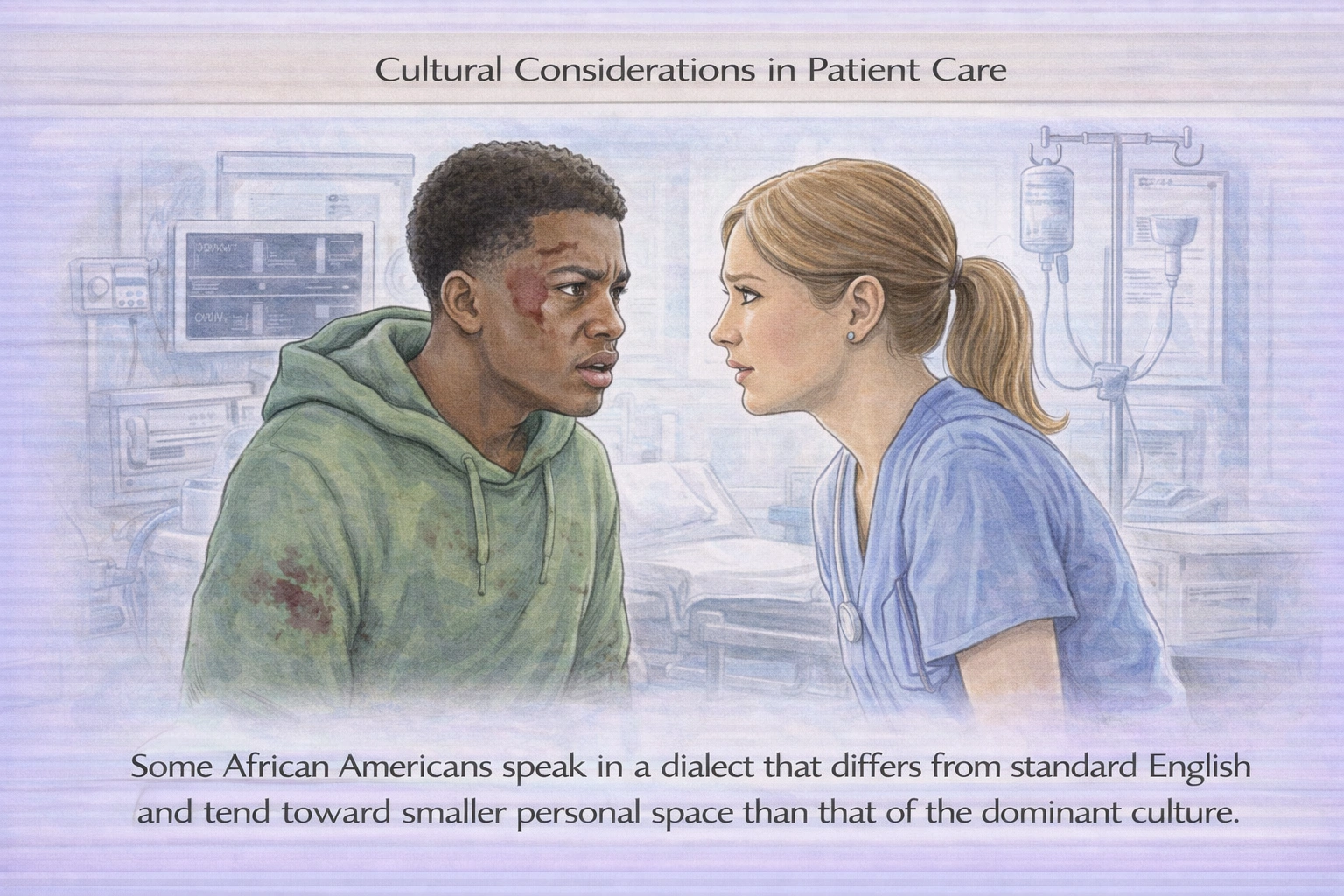
An African American youth, growing up in an impoverished neighborhood, presents in the emergency department with bruises to his face, chest, and arms. He appears to be upset, is speaking in a dialect that is difficult for the nurse to understand, and is standing within 6 inches of the nurses personal space. What cultural consideration should a nurse identify as playing a role in this youths behavior?
A.
African Americans frequently speak in different tongues when they are upset.
B. Most African Americans have learned to be aggressive when they have to see a health professional.
C. African Americans tend to use dialects and invasion of personal space to intimidate others.
D. Some African Americans speak in a dialect that is different from standard English and tend toward smaller personal space than that of the dominant culture.
Rationale
The cultural consideration the nurse should identify is "Some African Americans speak in a dialect that is different from standard English and tend toward smaller personal space than that of the dominant culture.".
A. African Americans frequently speak in different tongues when they are upset.
This choice relies on an overly broad stereotype instead of the specific assessment cues in the stem. Cultural patterns can inform care, but they are not universal. The statement "African Americans frequently speak in different tongues when they are upset." is not supported by the scenario ("An African American youth, growing up in an impoverished neighborhood, presents in the..."). A good elimination step is to remove choices that stereotype or drift away from the stem's priority.
B. Most African Americans have learned to be aggressive when they have to see a health professional.
This option generalizes about an entire group. The nurse should individualize assessment rather than accept absolutes. The statement "Most African Americans have learned to be aggressive when they have to see a health professional." is not supported by the scenario ("An African American youth, growing up in an impoverished neighborhood, presents in the..."). Choose the option that answers the question directly without adding extra assumptions.
C. African Americans tend to use dialects and invasion of personal space to intimidate others.
This option generalizes about an entire group. The nurse should individualize assessment rather than accept absolutes. The statement "African Americans tend to use dialects and invasion of personal space to intimidate others." is not supported by the scenario ("An African American youth, growing up in an impoverished neighborhood, presents in the..."). In practice, the nurse should stay with assessment cues and culturally safe interpretation.
D. Some African Americans speak in a dialect that is different from standard English and tend toward smaller personal space than that of the dominant culture.
This is the strongest option because it applies culturally informed, nonjudgmental nursing interpretation. It addresses the stem's focus ("An African American youth, growing up in an impoverished neighborhood, presents in the...") in a straightforward way. From a nursing-process perspective, it prioritizes assessment and therapeutic effectiveness.
**Conclusion**
This item centers on An African American youth, growing up in an impoverished neighborhood, presents in the emergency department with... Some African Americans speak in a dialect that is different from standard English and.... Options written in sweeping terms tend to replace individualized assessment with assumptions; that approach weakens accuracy and rapport. Clinically, this reasoning helps maintain rapport while guiding safe nursing decision-making.
Which rationale by a nursing instructor best explains why it is challenging to globally classify the Asian American culture?
A.
Extremes of emotional expression prevent accurate assessment of this culture.
B. Suspicion of Western civilization has resulted in minimal cultural research.
C. The small size of this subpopulation makes research virtually impossible.
D. The Asian American culture includes individuals from many different countries.
Rationale
The rationale by a nursing instructor best explains why it is challenging to globally classify the Asian American culture" is "The Asian American culture includes individuals from many different countries.".
A. Extremes of emotional expression prevent accurate assessment of this culture.
This option introduces cause-and-effect that the stem does not provide evidence for. The conclusion goes beyond the data given. Here, "Extremes of emotional expression prevent accurate assessment of this culture." pulls the nurse away from the stem's cue ("Which rationale by a nursing instructor best explains why it is challenging to..."). Choose the option that answers the question directly without adding extra assumptions.
B. Suspicion of Western civilization has resulted in minimal cultural research.
This choice explains the situation using assumptions rather than assessment findings. The statement "Suspicion of Western civilization has resulted in minimal cultural research." is not supported by the scenario ("Which rationale by a nursing instructor best explains why it is challenging to..."). In practice, the clinician should stay with assessment cues and culturally safe interpretation.
C. The small size of this subpopulation makes research virtually impossible.
This choice relies on an overly broad stereotype instead of the specific assessment cues in the stem. Cultural patterns can inform care, but they are not universal. Compared with the stem ("Which rationale by a nursing instructor best explains why it is challenging to..."), this choice introduces a different emphasis ("The small size of this subpopulation makes research virtually impossible."). Choose the option that answers the question directly without adding extra assumptions.
D. The Asian American culture includes individuals from many different countries.
This is the best answer because it directly reflects the key cue in the stem. It addresses the stem's priority ("Which rationale by a nursing instructor best explains why it is challenging to...") in a straightforward way. From a nursing-process perspective, it prioritizes assessment and therapeutic effectiveness.
**Conclusion**
In this situation, the main issue is Which rationale by a nursing instructor best explains why it is challenging to globally classify the Asian American.... The best-supported answer is The Asian American culture includes individuals from many different countries., because it matches the situation described. A number of choices depend on conclusions the scenario does not provide enough data to support, creating avoidable leaps in reasoning. Several alternatives rely on broad, absolute statements that can turn cultural knowledge into stereotyping, which is unsafe for clinical judgment. This interpretation promotes culturally safe care and reduces the risk of misunderstanding client behavior.

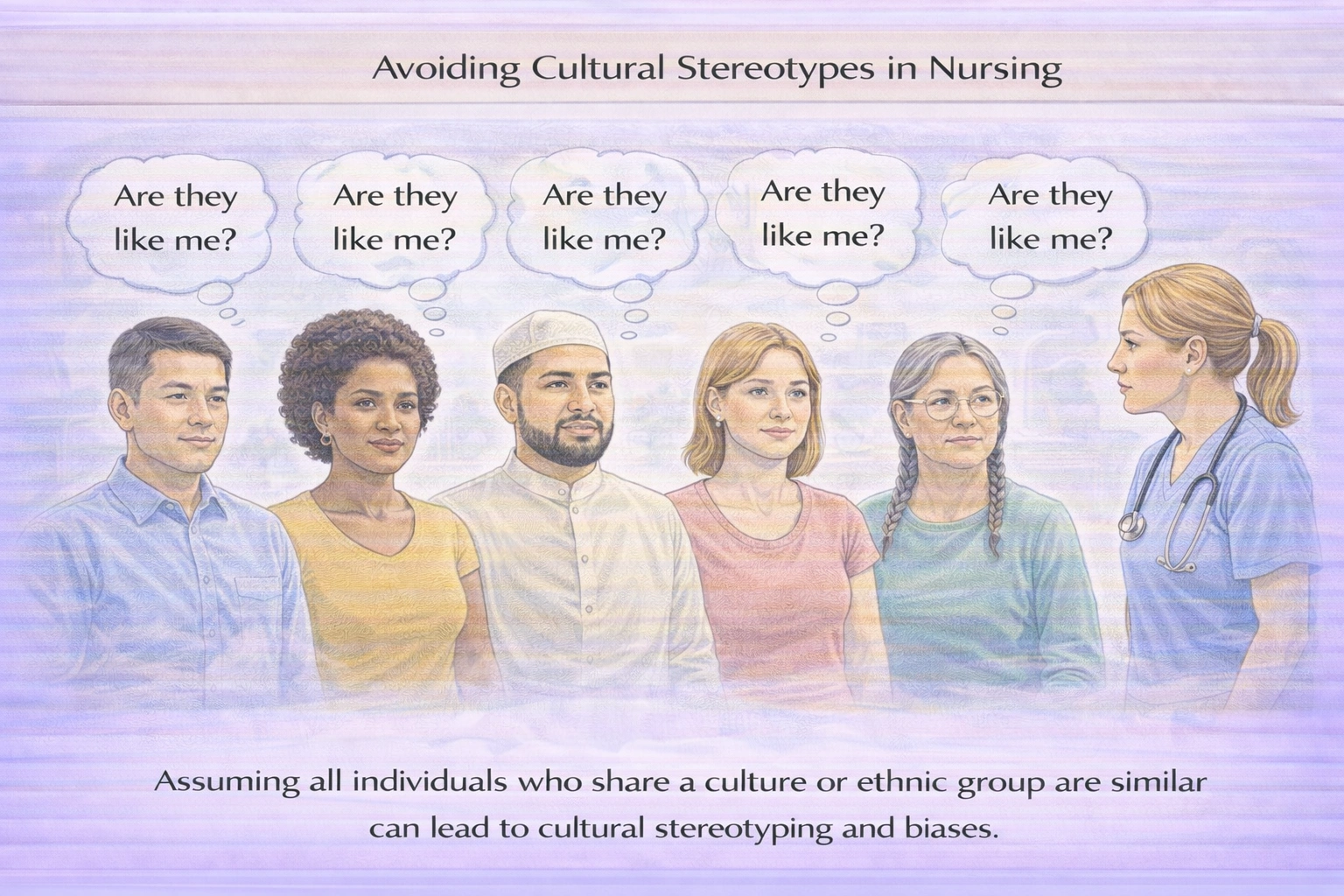
When working with clients of any culture, which action should a nurse avoid?
A.
Maintaining eye contact, based on cultural norms
B. Assuming that all individuals who share a culture or ethnic group are similar
C. Supporting the client in participating in cultural and spiritual rituals
D. Using an interpreter to clarify communication
Rationale
The correct response to "When working with clients of any culture, which action should a nurse avoid" is "Assuming that all individuals who share a culture or ethnic group are similar".
A. Maintaining eye contact, based on cultural norms
This answer does not address the stem's main point. It either answers a different question or adds meaning not provided in the scenario. Here, "Maintaining eye contact, based on cultural norms" pulls the nurse away from the stem's cue ("When working with clients of any culture, which action should a nurse avoid?"). Choose the option that answers the question directly without adding extra assumptions.
B. Assuming that all individuals who share a culture or ethnic group are similar
This is the strongest option because it applies culturally informed, nonjudgmental nursing interpretation. It matches what the stem emphasizes ("When working with clients of any culture, which action should a nurse avoid?") and guides appropriate nursing judgment. From a nursing-process perspective, it prioritizes assessment and therapeutic effectiveness.
C. Supporting the client in participating in cultural and spiritual rituals
This choice misses the focus of the question and would lead the nurse away from the best clinical judgment. Here, "Supporting the client in participating in cultural and spiritual rituals" pulls the nurse away from the stem's cue ("When working with clients of any culture, which action should a nurse avoid?"). In practice, the nurse should stay with assessment cues and culturally safe interpretation.
D. Using an interpreter to clarify communication
This option is off-target for what the stem is asking. It may be loosely connected, but it doesn't match the priority concept. The statement "Using an interpreter to clarify communication" is not supported by the scenario ("When working with clients of any culture, which action should a nurse avoid?"). A good elimination step is to remove choices that stereotype or drift away from the stem's priority.
**Conclusion**
In this situation, the main issue is When working with clients of any culture, which action should a nurse avoid?. The best-supported answer is Assuming that all individuals who share a culture or ethnic group are similar, because it matches the situation described. The better reasoning here is the one that connects directly to the scenario details and the concept being tested. Clinically, this reasoning helps maintain rapport while guiding safe nursing decision-making.
When planning care for a Latino American client, the nurse should be aware of which cultural influence that may impact access to health care?
A.
The root doctor may be the first contact made when illness is encountered.
B. The yin and yang practitioner may be the first contact made when illness is encountered.
C. The shaman may be the first contact made when illness is encountered.
D. The curandero may be the first contact made when illness is encountered.
Rationale
The statement that best answers "When planning care for a Latino American client, the nurse should be aware of which cultural influence that may impact access to health care" is "The curandero may be the first contact made when illness is encountered.".
A. The root doctor may be the first contact made when illness is encountered.
This answer does not address the stem's main point. It either answers a different question or adds meaning not provided in the situation. Compared with the stem ("When planning care for a Latino American client, the nurse should be aware of which..."), this choice introduces a different emphasis ("The root doctor may be the first contact made when illness is encountered."). A good elimination step is to remove choices that stereotype or drift away from the stem's priority.
B. The yin and yang practitioner may be the first contact made when illness is encountered.
This choice misses the priority of the question and would lead the nurse away from the best clinical judgment. This answer centers "The yin and yang practitioner may be the first contact made when illness is encountered.," but the stem highlights "When planning care for a Latino American client, the nurse should be aware of which...." Clinically, this would risk misinterpretation because it is not grounded in the presented data.
C. The shaman may be the first contact made when illness is encountered.
This choice misses the focus of the question and would lead the nurse away from the best clinical judgment. Here, "The shaman may be the first contact made when illness is encountered." pulls the nurse away from the stem's cue ("When planning care for a Latino American client, the nurse should be aware of which..."). Choose the option that answers the question directly without adding extra assumptions.
D. The curandero may be the first contact made when illness is encountered.
This is the strongest choice because it applies culturally informed, nonjudgmental nursing interpretation. It keeps attention on "When planning care for a Latino American client, the nurse should be aware of which...," which is what this item is testing. From a nursing-process perspective, it prioritizes assessment and therapeutic effectiveness.
**Conclusion**
In this situation, the main issue is When planning care for a Latino American client, the nurse should be aware of which cultural influence that may impact.... The most appropriate response is The curandero may be the first contact made when illness is encountered., which aligns with the concept tested in the scenario. The better reasoning here is the one that connects directly to the scenario details and the concept being tested. In practice, this approach supports accurate assessment and respectful, client-centered care.

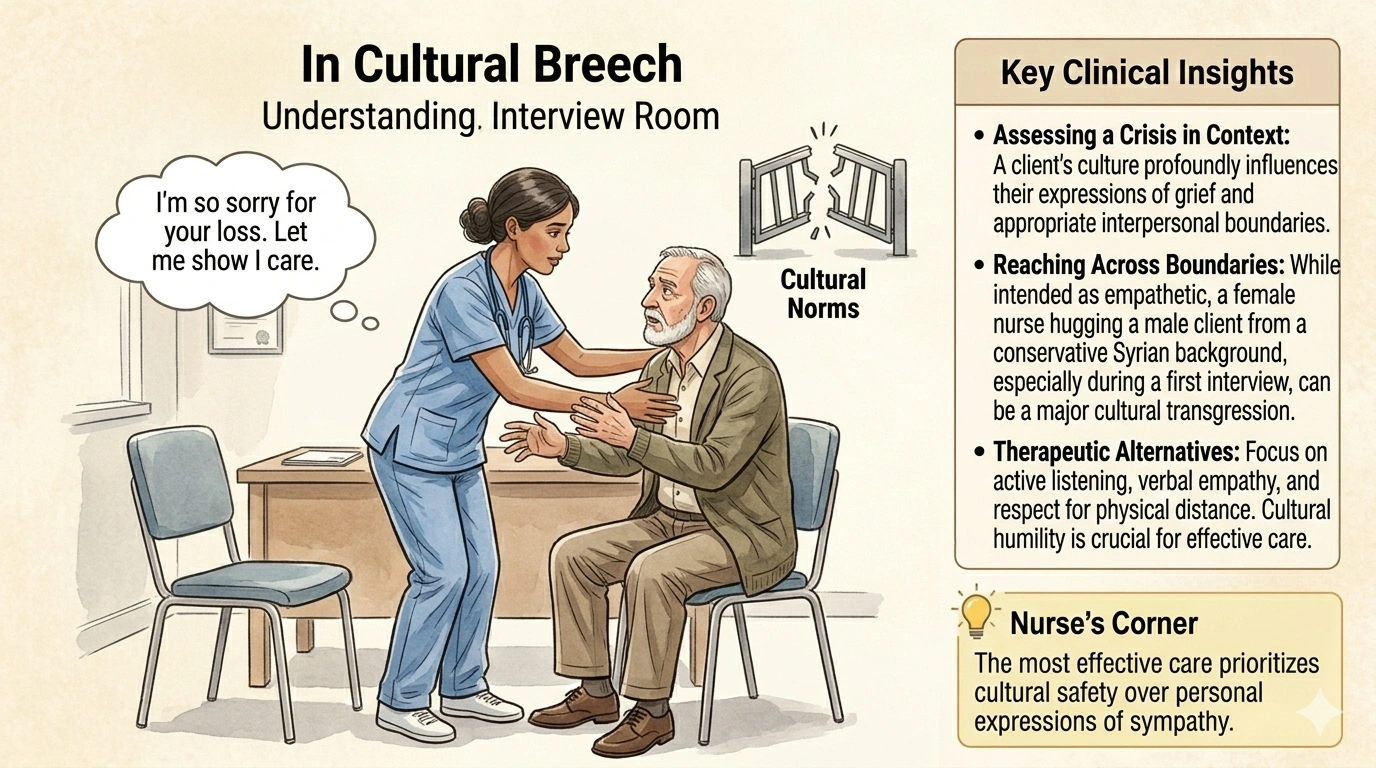
During the first interview with a man from Syria who has just lost his son in a car accident, in sympathy for the mans loss, the female nurse reaches out and hugs him. Which is an accurate evaluation of the nurses action?
A.
The nurses action should be evaluated as unacceptable due to breech of cultural norms.
B. The nurses action should be evaluated as empathetic, encouraging expression of feelings.
C. The nurses action should be evaluated as the technique of offering self.
D. The nurses action should be evaluated as inappropriate due to poor timing.
Rationale
For "Which is an accurate evaluation of the nurses action," the best answer is "The nurses action should be evaluated as unacceptable due to breech of cultural norms.".
A. The nurses action should be evaluated as unacceptable due to breech of cultural norms.
This is the strongest option because it applies culturally informed, nonjudgmental nursing interpretation. It keeps attention on "During the first interview with a man from Syria who has just lost his son in a car...," which is what this item is testing. Clinically, it helps preserve rapport while interpreting behavior through context.
B. The nurses action should be evaluated as empathetic, encouraging expression of feelings.
This choice misses the focus of the question and would lead the nurse away from the best clinical judgment. Compared with the stem ("During the first interview with a man from Syria who has just lost his son in a car..."), this choice introduces a different emphasis ("The nurses action should be evaluated as empathetic, encouraging expression of feelings."). In practice, the nurse should stay with assessment cues and culturally safe interpretation.
C. The nurses action should be evaluated as the technique of offering self.
This answer does not address the stem's main point. It either answers a different question or adds meaning not provided in the scenario. This answer centers "The nurses action should be evaluated as the technique of offering self.," but the stem highlights "During the first interview with a man from Syria who has just lost his son in a car...." Choose the option that answers the question directly without adding extra assumptions.
D. The nurses action should be evaluated as inappropriate due to poor timing.
This answer does not address the stem's main point. It either answers a different question or adds meaning not provided in the scenario. Here, "The nurses action should be evaluated as inappropriate due to poor timing." pulls the nurse away from the stem's cue ("During the first interview with a man from Syria who has just lost his son in a car..."). Choose the option that answers the question directly without adding extra assumptions.
**Conclusion**
In this situation, the main issue is During the first interview with a man from Syria who has just lost his son in a car accident, in sympathy for the mans.... The most appropriate response is The nurses action should be evaluated as unacceptable due to breech of cultural norms., which aligns with the concept tested in the scenario. The strongest answers in this set stay closely tied to what is stated in the scenario and avoid adding extra meaning. This interpretation promotes culturally safe care and reduces the risk of misunderstanding client behavior.
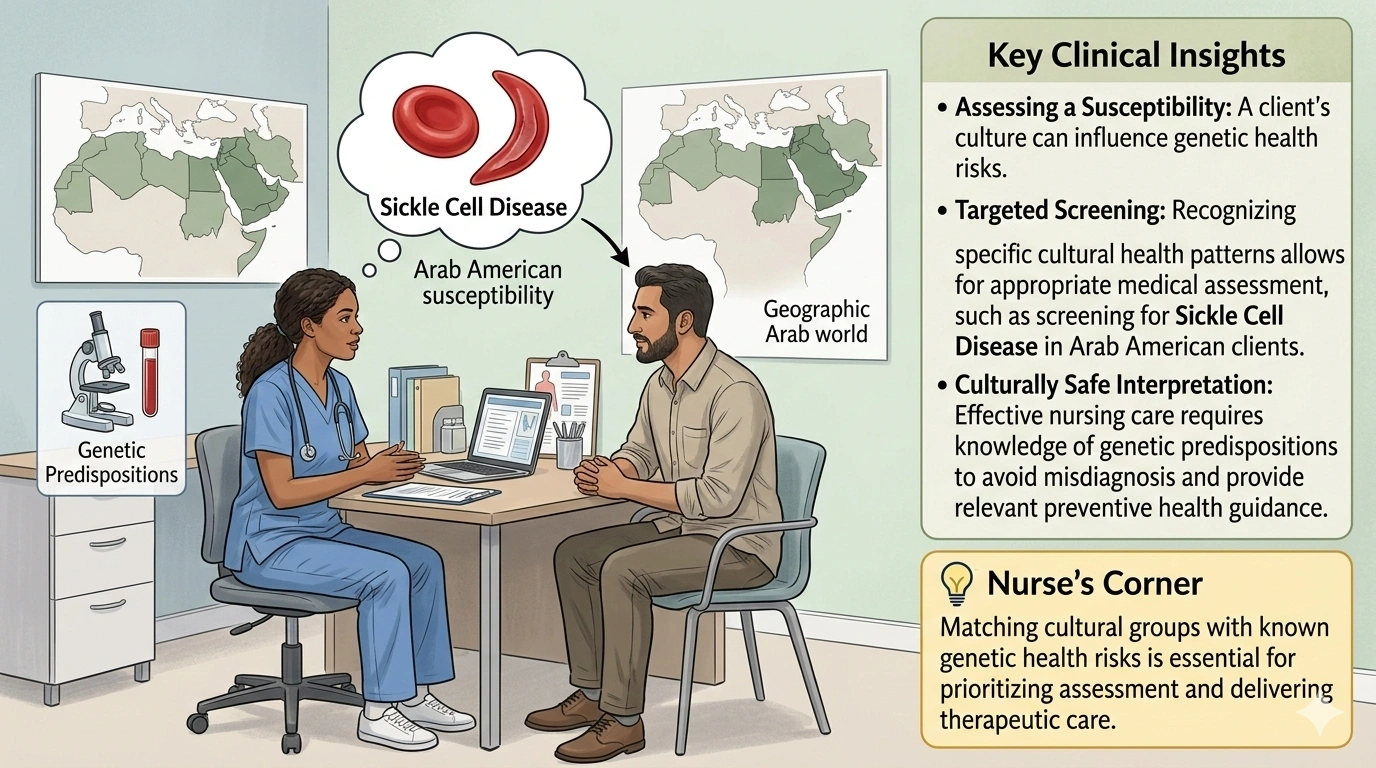
Which cultural group is correctly matched with the disease process for which this group is most susceptible?
A.
African Americans are susceptible to lactose intolerance.
B. Western European Americans are susceptible to malaria.
C. Arab Americans are susceptible to sickle cell disease.
D. Jewish Americans are susceptible to thalassemia.
Rationale
What the nurse should choose for "Which cultural group is correctly matched with the disease process for which this group is most susceptible" is "Arab Americans are susceptible to sickle cell disease.".
A. African Americans are susceptible to lactose intolerance.
Even if it sounds related, it does not answer the stem's target concept. Follow the scenario's cue instead of jumping to this label. Here, "African Americans are susceptible to lactose intolerance." pulls the nurse away from the stem's cue ("Which cultural group is correctly matched with the disease process for which this..."). A good elimination step is to remove choices that stereotype or drift away from the stem's priority.
B. Western European Americans are susceptible to malaria.
This selection belongs to another content area. The stem is testing culturally informed nursing care, not this condition. This answer centers "Western European Americans are susceptible to malaria.," but the stem highlights "Which cultural group is correctly matched with the disease process for which this...." Clinically, this would risk misinterpretation because it is not grounded in the presented data.
C. Arab Americans are susceptible to sickle cell disease.
This answer is supported by the stem and aligns with safe, client-centered nursing care. It matches what the stem emphasizes ("Which cultural group is correctly matched with the disease process for which this...") and guides appropriate nursing judgment. From a nursing-process perspective, it prioritizes assessment and therapeutic effectiveness.
D. Jewish Americans are susceptible to thalassemia.
This choice shifts to a different clinical concept than the stem is testing. The question is prioritying on cultural/communication judgment, not this clinical category. This answer centers "Jewish Americans are susceptible to thalassemia.," but the stem highlights "Which cultural group is correctly matched with the disease process for which this...." Clinically, this would risk misinterpretation because it is not grounded in the presented data.
**Conclusion**
This item centers on Which cultural group is correctly matched with the disease process for which this group is most susceptible?. The most appropriate response is Arab Americans are susceptible to sickle cell disease., which aligns with the concept tested in the scenario. Some options introduce a different disorder/disease category rather than addressing what the scenario is actually evaluating. Clinically, this reasoning helps maintain rapport while guiding safe nursing decision-making.
Because of cultural characteristics, in which of the following cultural groups would a nurses assessment of mood and affect be most challenging? Select all that apply.
A.
Arab Americans
B. Native Americans
C. Latino Americans
D. Western European Americans
Rationale
For "Because of cultural characteristics, in which of the following cultural groups would a nurses assessment of mood and affect be most challenging? Select all that apply.," the best answer is "Native Americans, Asian Americans".
A. Arab Americans
This choice misses the focus of the question and would lead the nurse away from the best clinical judgment. Here, "Arab Americans" pulls the nurse away from the stem's cue ("Because of cultural characteristics, in which of the following cultural groups would a..."). In practice, the nurse should stay with assessment cues and culturally safe interpretation.
B. Native Americans
This is the best answer because it directly reflects the key cue in the stem. It matches what the stem emphasizes ("Because of cultural characteristics, in which of the following cultural groups would a...") and guides appropriate nursing judgment. It promotes safe decision-making by basing interpretation on observable data.
C. Latino Americans
This answer does not address the stem's main point. It either answers a different question or adds meaning not provided in the scenario. This answer centers "Latino Americans," but the stem highlights "Because of cultural characteristics, in which of the following cultural groups would a...." A good elimination step is to remove choices that stereotype or drift away from the stem's priority.
D. Western European Americans
This choice misses the priority of the question and would lead the nurse away from the best clinical judgment. Here, "Western European Americans" pulls the nurse away from the stem's cue ("Because of cultural characteristics, in which of the following cultural groups would a..."). Clinically, this would risk misinterpretation because it is not grounded in the presented data.
E. Asian Americans
This choice misses the priority of the question and would lead the nurse away from the best clinical judgment. Compared with the stem ("Because of cultural characteristics, in which of the following cultural groups would a..."), this choice introduces a different emphasis ("Asian Americans"). Clinically, this would risk misinterpretation because it is not grounded in the presented data.
**Conclusion**
The scenario emphasizes Because of cultural characteristics, in which of the following cultural groups would a nurses assessment of mood and.... The best-supported answer is Native Americans; Asian Americans, because it matches the situation described. The better reasoning here is the one that connects directly to the scenario details and the concept being tested. This interpretation promotes culturally safe care and reduces the risk of misunderstanding client behavior.
Chapter 7. Relationship Development
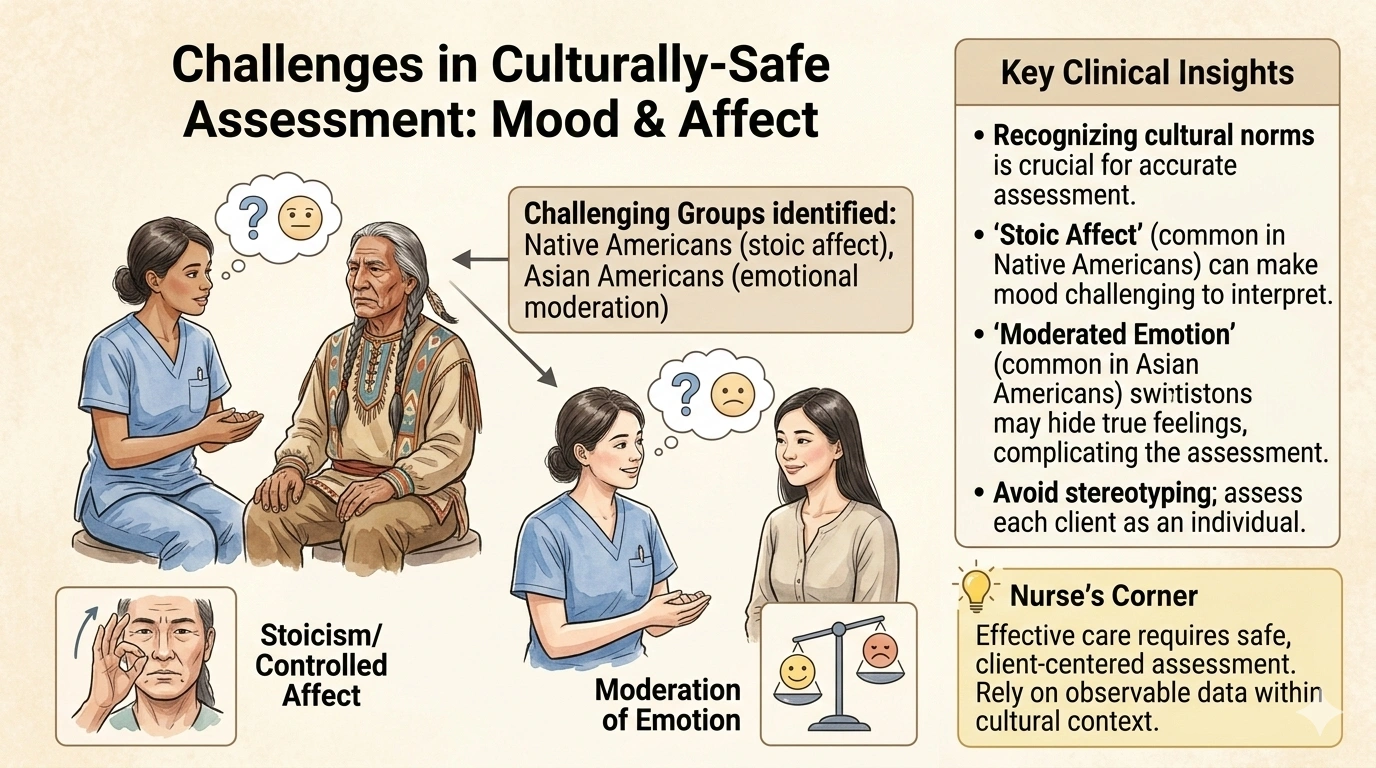
Which is the best nursing action when a client demonstrates transference toward a nurse?
A.
Promoting safety and immediately terminating the relationship with the client
B. Encouraging the client to ignore these thoughts and feelings
C. Immediately reassigning the client to another staff member
D. Helping the client to clarify the meaning of the current nurseclient relationship
Rationale
For "Which is the best nursing action when a client demonstrates transference toward a nurse," the best answer is "Helping the client to clarify the meaning of the current nurseclient relationship".
A. Promoting safety and immediately terminating the relationship with the client
This choice misses the focus of the question and would lead the nurse away from the best clinical judgment. Compared with the stem ("Which is the best nursing action when a client demonstrates transference toward a nurse?"), this choice introduces a different emphasis ("Promoting safety and immediately terminating the relationship with the client"). Clinically, this would risk misinterpretation because it is not grounded in the presented data.
B. Encouraging the client to ignore these thoughts and feelings
This choice misses the focus of the question and would lead the nurse away from the best clinical judgment. The statement "Encouraging the client to ignore these thoughts and feelings" is not supported by the scenario ("Which is the best nursing action when a client demonstrates transference toward a nurse?"). In practice, the clinician should stay with assessment cues and culturally safe interpretation.
C. Immediately reassigning the client to another staff member
This choice misses the priority of the question and would lead the nurse away from the best clinical judgment. Compared with the stem ("Which is the best nursing action when a client demonstrates transference toward a nurse?"), this choice introduces a different emphasis ("Immediately reassigning the client to another staff member"). Choose the choice that answers the question directly without adding extra assumptions.
D. Helping the client to clarify the meaning of the current nurseclient relationship
This choice fits because it stays grounded in the scenario and avoids added assumptions. It matches what the stem emphasizes ("Which is the best nursing action when a client demonstrates transference toward a nurse?") and guides appropriate nursing judgment. Clinically, it helps preserve rapport while interpreting behavior through context.
**Conclusion**
This item centers on Which is the best nursing action when a client demonstrates transference toward a nurse?. The best-supported answer is Helping the client to clarify the meaning of the current nurseclient relationship, because it matches the situation described. The better reasoning here is the one that connects directly to the scenario details and the concept being tested. Clinically, this reasoning helps maintain rapport while guiding safe nursing decision-making.
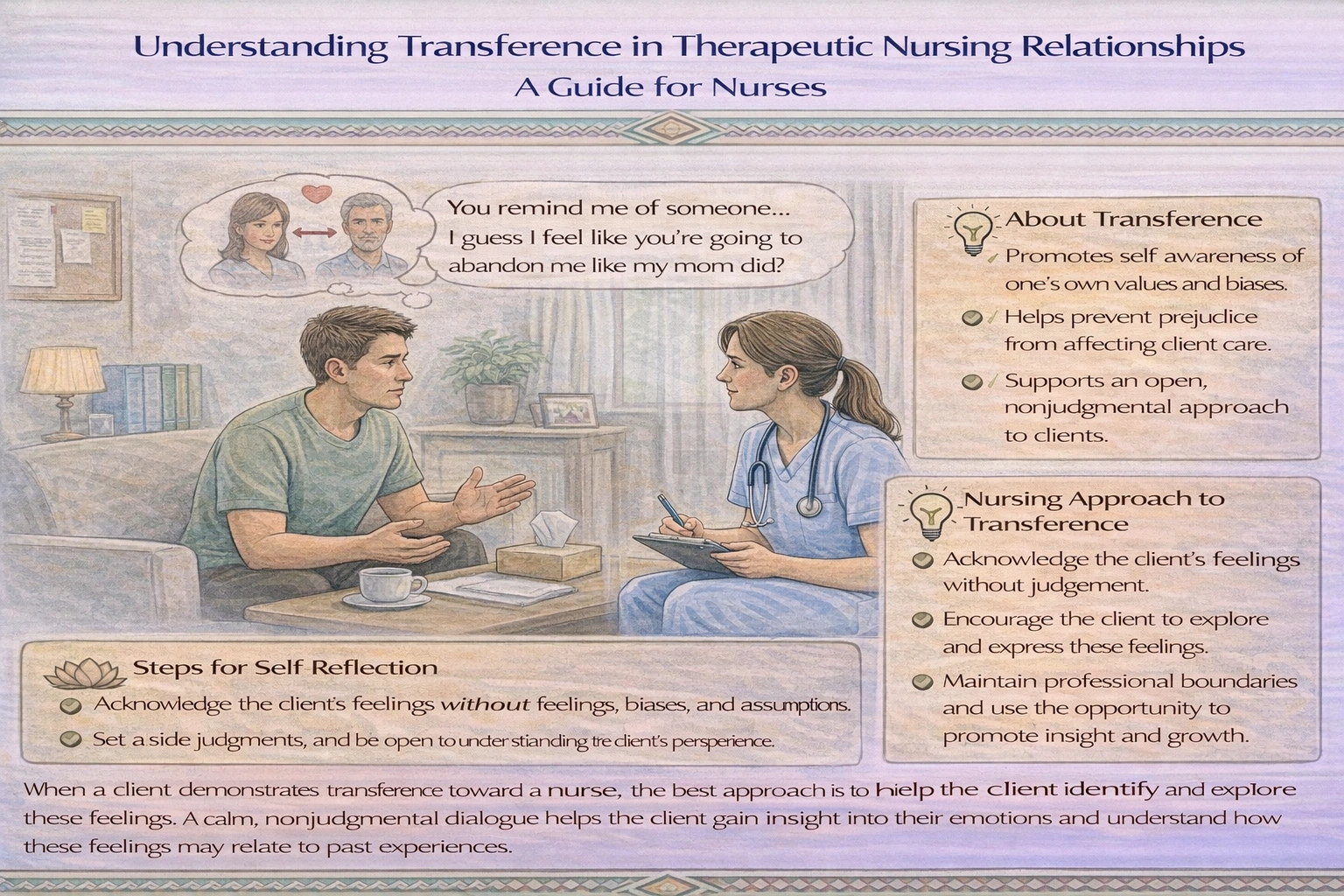
What should be the nurses primary goal during the preinteraction phase of the nurseclient relationship?
A.
To evaluate goal attainment and ensure therapeutic closure
B. To establish trust and formulate a contract for intervention
C.
D.
Rationale
The most appropriate selection for "What should be the nurses primary goal during the preinteraction phase of the nurseclient relationship" is "".
A. To evaluate goal attainment and ensure therapeutic closure
This choice misses the focus of the question and would lead the nurse away from the best clinical judgment. Here, "To evaluate goal attainment and ensure therapeutic closure" pulls the nurse away from the stem's cue ("What should be the nurses primary goal during the preinteraction phase of the..."). In practice, the clinician should stay with assessment cues and culturally safe interpretation.
B. To establish trust and formulate a contract for intervention
This choice misses the focus of the question and would lead the nurse away from the best clinical judgment. Here, "To establish trust and formulate a contract for intervention" pulls the nurse away from the stem's cue ("What should be the nurses primary goal during the preinteraction phase of the..."). Choose the option that answers the question directly without adding extra assumptions.
**Conclusion**
The focus of this question is What should be the nurses primary goal during the preinteraction phase of the nurseclient relationship?. The correct response should be the one that addresses the concept being tested using only the information given. The strongest answers in this set stay closely tied to what is stated in the scenario and avoid adding extra meaning. In practice, this approach supports accurate assessment and respectful, client-centered care.
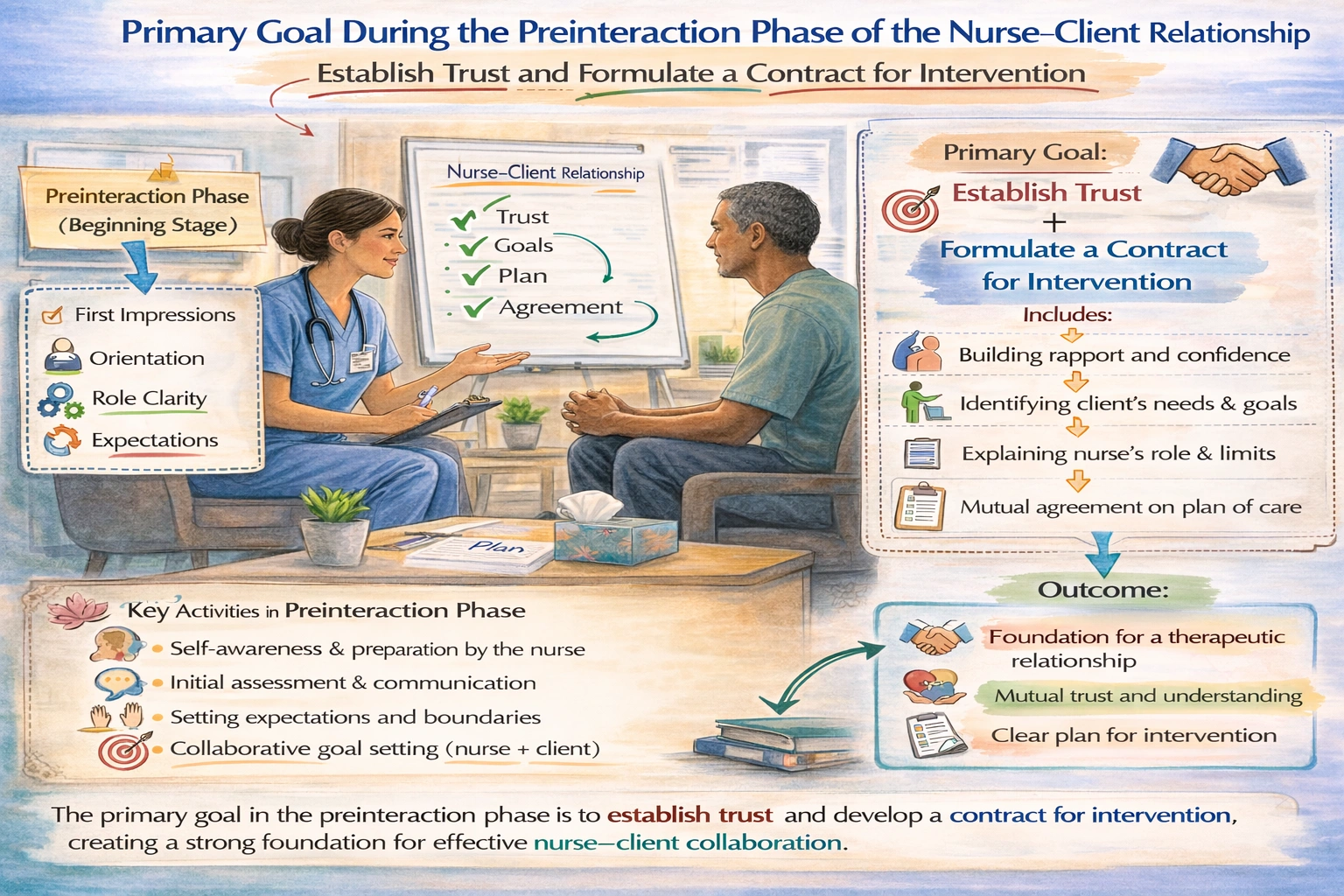
A client has made the decision to leave her alcoholic husband. She is feeling very depressed. Which nontherapeutic statement by the nurse conveys sympathy?
A.
You are feeling very depressed. I felt the same way when I decided to leave my husband.
B. I can understand you are feeling depressed. It was a difficult decision. Ill sit with you.
C. You seem depressed. It was a difficult decision to make. Would you like to talk about it?
D. I know this is a difficult time for you. Would you like a prn medication for anxiety?
Rationale
The answer to "Which nontherapeutic statement by the nurse conveys sympathy" is "You are feeling very depressed. I felt the same way when I decided to leave my husband.".
A. You are feeling very depressed. I felt the same way when I decided to leave my husband.
This is the best answer because it directly reflects the key cue in the stem. It addresses the stem's priority ("A client has made the decision to leave her alcoholic husband. She is feeling very...") in a straightforward way. It promotes safe decision-making by basing interpretation on observable data.
B. I can understand you are feeling depressed. It was a difficult decision. Ill sit with you.
This choice misses the priority of the question and would lead the nurse away from the best clinical judgment. Compared with the stem ("A client has made the decision to leave her alcoholic husband. She is feeling very..."), this choice introduces a different emphasis ("I can understand you are feeling depressed. It was a difficult decision. Ill sit with you."). Clinically, this would risk misinterpretation because it is not grounded in the presented data.
C. You seem depressed. It was a difficult decision to make. Would you like to talk about it?
This answer does not address the stem's main point. It either answers a different question or adds meaning not provided in the situation. The statement "You seem depressed. It was a difficult decision to make. Would you like to talk about it?" is not supported by the scenario ("A client has made the decision to leave her alcoholic husband. She is feeling very..."). A good elimination step is to remove choices that stereotype or drift away from the stem's priority.
D. I know this is a difficult time for you. Would you like a prn medication for anxiety?
This choice misses the focus of the question and would lead the nurse away from the best clinical judgment. This answer centers "I know this is a difficult time for you. Would you like a prn medication for anxiety?," but the stem highlights "A client has made the decision to leave her alcoholic husband. She is feeling very...." Clinically, this would risk misinterpretation because it is not grounded in the presented data.
**Conclusion**
The focus of this question is A client has made the decision to leave her alcoholic husband. She is feeling very depressed. Which nontherapeutic... You are feeling very depressed. I felt the same way when I decided to leave my husband.. The strongest answers in this set stay closely tied to what is stated in the scenario and avoid adding extra meaning. In practice, this approach supports accurate assessment and respectful, client-centered care.
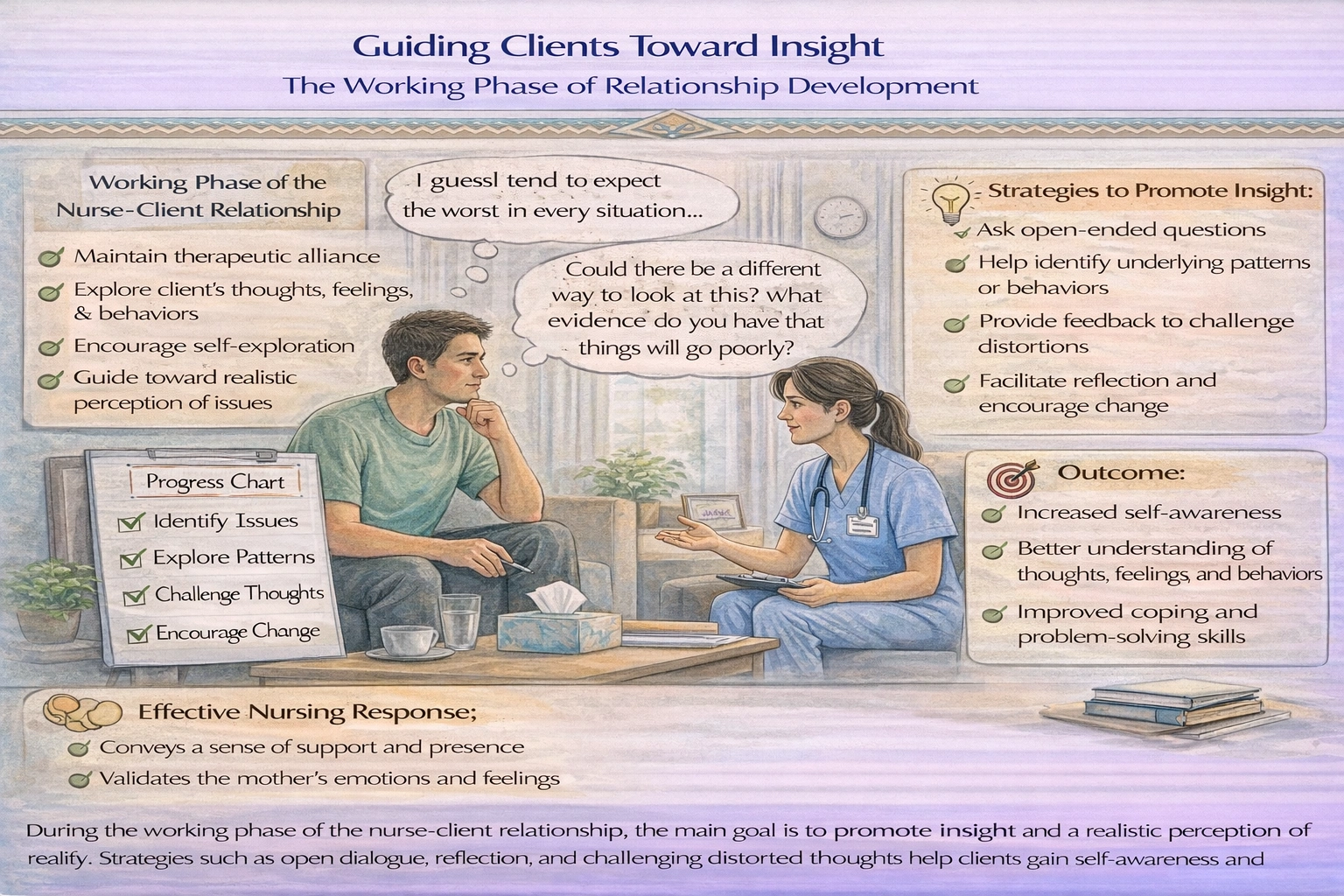
On which task should a nurse place priority during the working phase of relationship development?
A.
Establishing a contract for intervention
B. Examining feelings about working with a particular client
C. Establishing a plan for continuing aftercare
D. Promoting the clients insight and perception of reality
Rationale
The priority task is "Promoting the clients insight and perception of reality".
A. Establishing a contract for intervention
This choice misses the focus of the question and would lead the nurse away from the best clinical judgment. This answer centers "Establishing a contract for intervention," but the stem highlights "On which task should a nurse place priority during the working phase of relationship...." In practice, the nurse should stay with assessment cues and culturally safe interpretation.
B. Examining feelings about working with a particular client
This option is off-target for what the stem is asking. It may be loosely connected, but it doesn't match the priority concept. This answer centers "Examining feelings about working with a particular client," but the stem highlights "On which task should a nurse place priority during the working phase of relationship...." Choose the option that answers the question directly without adding extra assumptions.
C. Establishing a plan for continuing aftercare
This answer does not address the stem's main point. It either answers a different question or adds meaning not provided in the scenario. Compared with the stem ("On which task should a nurse place priority during the working phase of relationship..."), this choice introduces a different emphasis ("Establishing a plan for continuing aftercare"). A good elimination step is to remove choices that stereotype or drift away from the stem's priority.
D. Promoting the clients insight and perception of reality
This is the strongest option because it applies culturally informed, nonjudgmental nursing interpretation. It addresses the stem's focus ("On which task should a nurse place priority during the working phase of relationship...") in a straightforward way. It promotes safe decision-making by basing interpretation on observable data.
**Conclusion**
This item centers on On which task should a nurse place priority during the working phase of relationship development? Promoting the clients insight and perception of reality. The strongest answers in this set stay closely tied to what is stated in the scenario and avoid adding extra meaning. In practice, this approach supports accurate assessment and respectful, client-centered care.
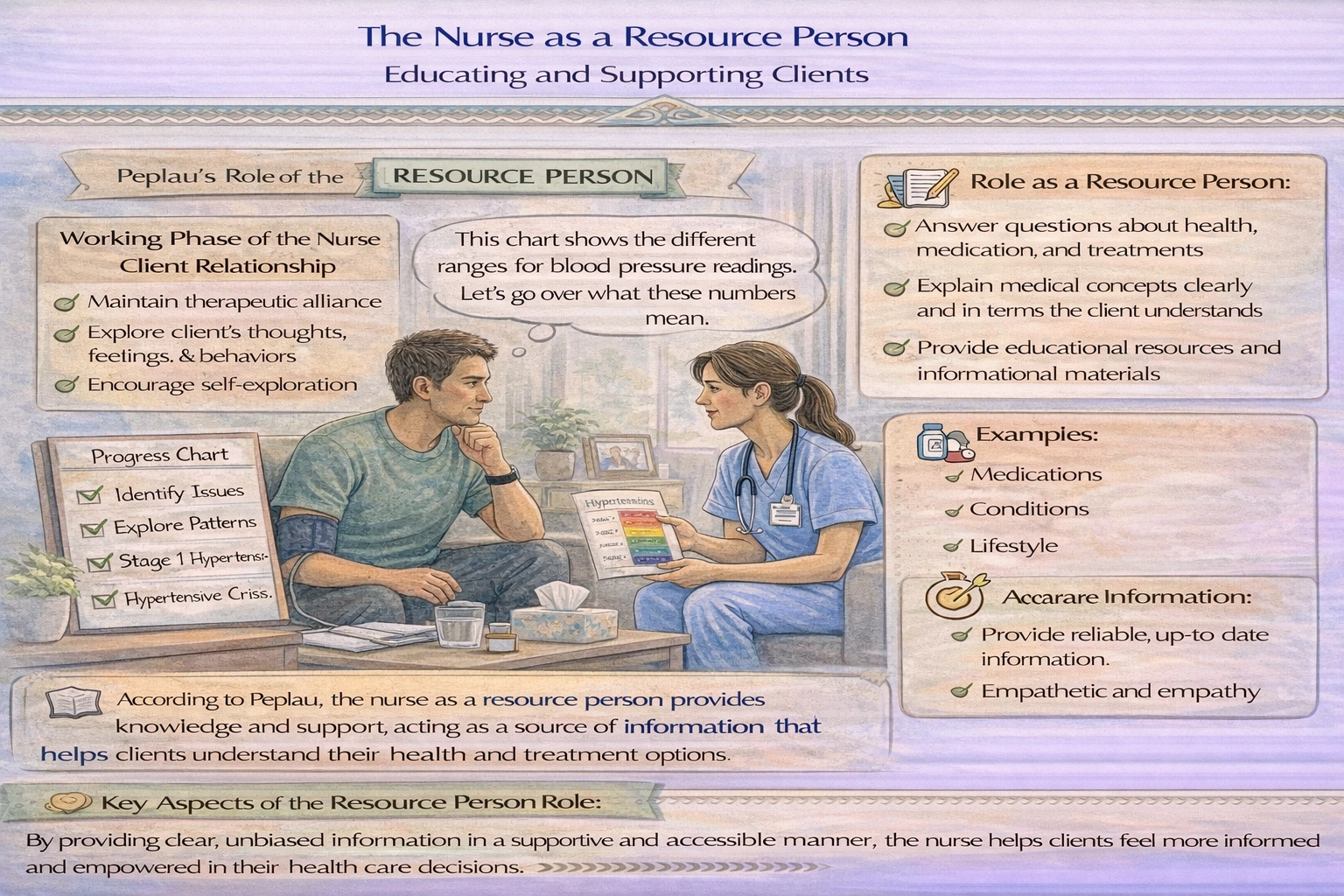
According to Peplau, which nursing action demonstrates the nurses role as a resource person?
A.
The nurse balances a safe therapeutic environment to increase the clients sense of belonging.
B. The nurse holds a group meeting with the clients on the unit to discuss common feelings about mental illness.
C. The nurse monitors the administration of medications and watches for signs of cheeking.
D. The nurse explains, in language the client can understand, information related to the clients health care.
Rationale
The statement that best answers "According to Peplau, which nursing action demonstrates the nurses role as a resource person" is "The nurse explains, in language the client can understand, information related to the clients health care.".
A. The nurse balances a safe therapeutic environment to increase the clients sense of belonging.
This choice misses the focus of the question and would lead the nurse away from the best clinical judgment. This answer centers "The nurse balances a safe therapeutic environment to increase the clients sense of belonging.," but the stem highlights "According to Peplau, which nursing action demonstrates the nurses role as a resource...." Choose the choice that answers the question directly without adding extra assumptions.
B. The nurse holds a group meeting with the clients on the unit to discuss common feelings about mental illness.
This choice is off-target for what the stem is asking. It may be loosely connected, but it doesn't match the priority concept. This answer centers "The nurse holds a group meeting with the clients on the unit to discuss common feelings about mental illness.," but the stem highlights "According to Peplau, which nursing action demonstrates the nurses role as a resource...." A good elimination step is to remove choices that stereotype or drift away from the stem's priority.
C. The nurse monitors the administration of medications and watches for signs of cheeking.
This answer does not address the stem's main point. It either answers a different question or adds meaning not provided in the scenario. Compared with the stem ("According to Peplau, which nursing action demonstrates the nurses role as a resource..."), this choice introduces a different emphasis ("The nurse monitors the administration of medications and watches for signs of cheeking."). A good elimination step is to remove choices that stereotype or drift away from the stem's priority.
D. The nurse explains, in language the client can understand, information related to the clients health care.
This is the strongest option because it applies culturally informed, nonjudgmental nursing interpretation. It matches what the stem emphasizes ("According to Peplau, which nursing action demonstrates the nurses role as a resource...") and guides appropriate nursing judgment. It promotes safe decision-making by basing interpretation on observable data.
**Conclusion**
In this situation, the main issue is According to Peplau, which nursing action demonstrates the nurses role as a resource person?. The best-supported answer is The nurse explains, in language the client can understand, information related to the..., because it matches the situation described. The strongest answers in this set stay closely tied to what is stated in the scenario and avoid adding extra meaning. In practice, this approach supports accurate assessment and respectful, client-centered care.
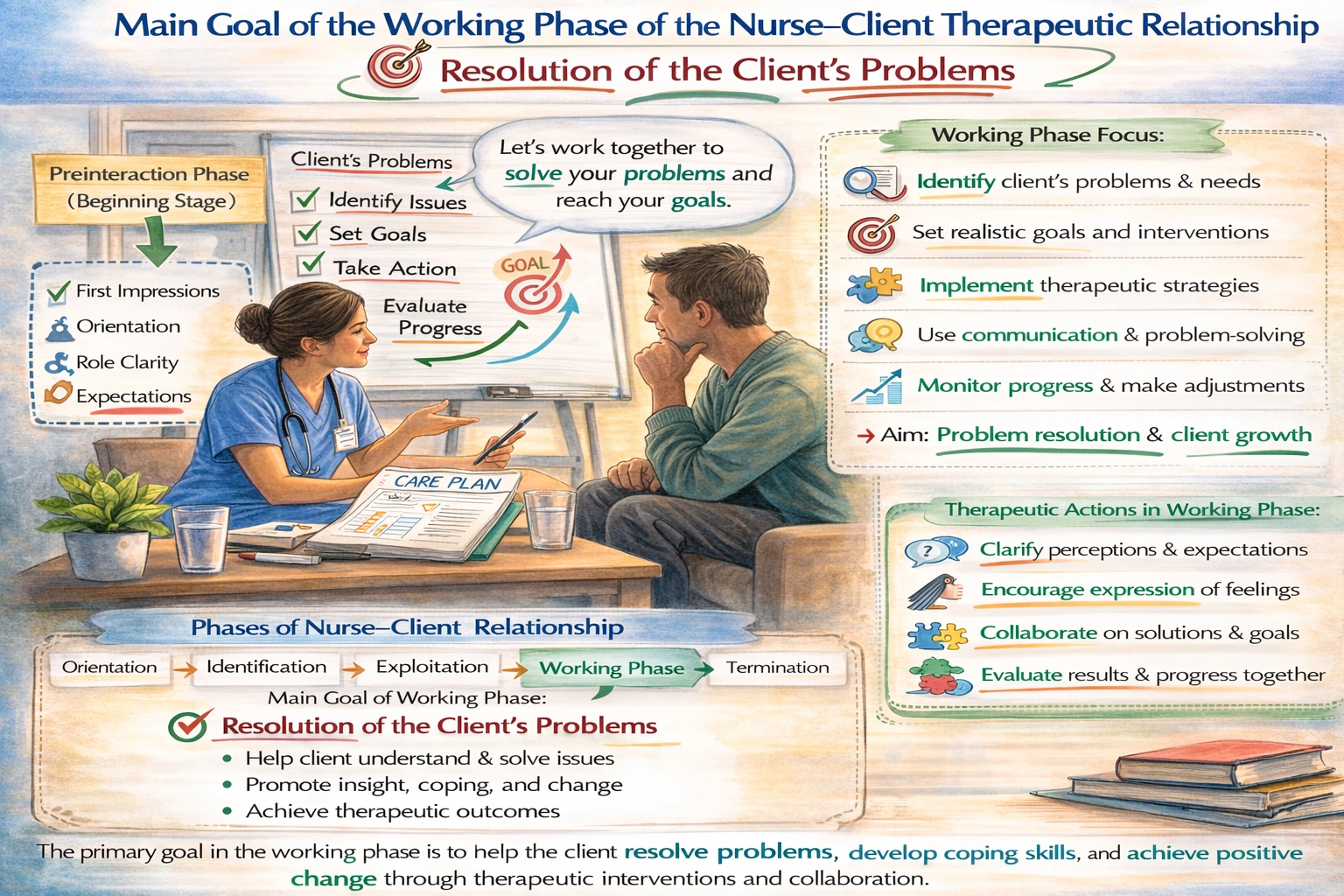
What is the main goal of the working phase of the nurseclient therapeutic relationship?
A.
Role modeling to improve interaction with others
B. Resolution of the clients problems
C. Using therapeutic communication to clarify perceptions
D. Helping the client access outpatient treatment
Rationale
What the nurse should choose for "What is the main goal of the working phase of the nurseclient therapeutic relationship" is "Resolution of the clients problems".
A. Role modeling to improve interaction with others
This choice misses the focus of the question and would lead the nurse away from the best clinical judgment. Compared with the stem ("What is the main goal of the working phase of the nurseclient therapeutic relationship?"), this choice introduces a different emphasis ("Role modeling to improve interaction with others"). Choose the choice that answers the question directly without adding extra assumptions.
B. Resolution of the clients problems
This answer is supported by the stem and aligns with safe, client-centered nursing care. It responds to "What is the main goal of the working phase of the nurseclient therapeutic relationship?" without stereotyping the client or shifting to a different concept. From a nursing-process perspective, it prioritizes assessment and therapeutic effectiveness.
C. Using therapeutic communication to clarify perceptions
This choice misses the focus of the question and would lead the nurse away from the best clinical judgment. Here, "Using therapeutic communication to clarify perceptions" pulls the nurse away from the stem's cue ("What is the main goal of the working phase of the nurseclient therapeutic relationship?"). Clinically, this would risk misinterpretation because it is not grounded in the presented data.
D. Helping the client access outpatient treatment
This answer does not address the stem's main point. It either answers a different question or adds meaning not provided in the scenario. This answer centers "Helping the client access outpatient treatment," but the stem highlights "What is the main goal of the working phase of the nurseclient therapeutic relationship?." Clinically, this would risk misinterpretation because it is not grounded in the presented data.
**Conclusion**
The scenario emphasizes What is the main goal of the working phase of the nurseclient therapeutic relationship? Resolution of the clients problems. The strongest answers in this set stay closely tied to what is stated in the scenario and avoid adding extra meaning. This interpretation promotes culturally safe care and reduces the risk of misunderstanding client behavior.
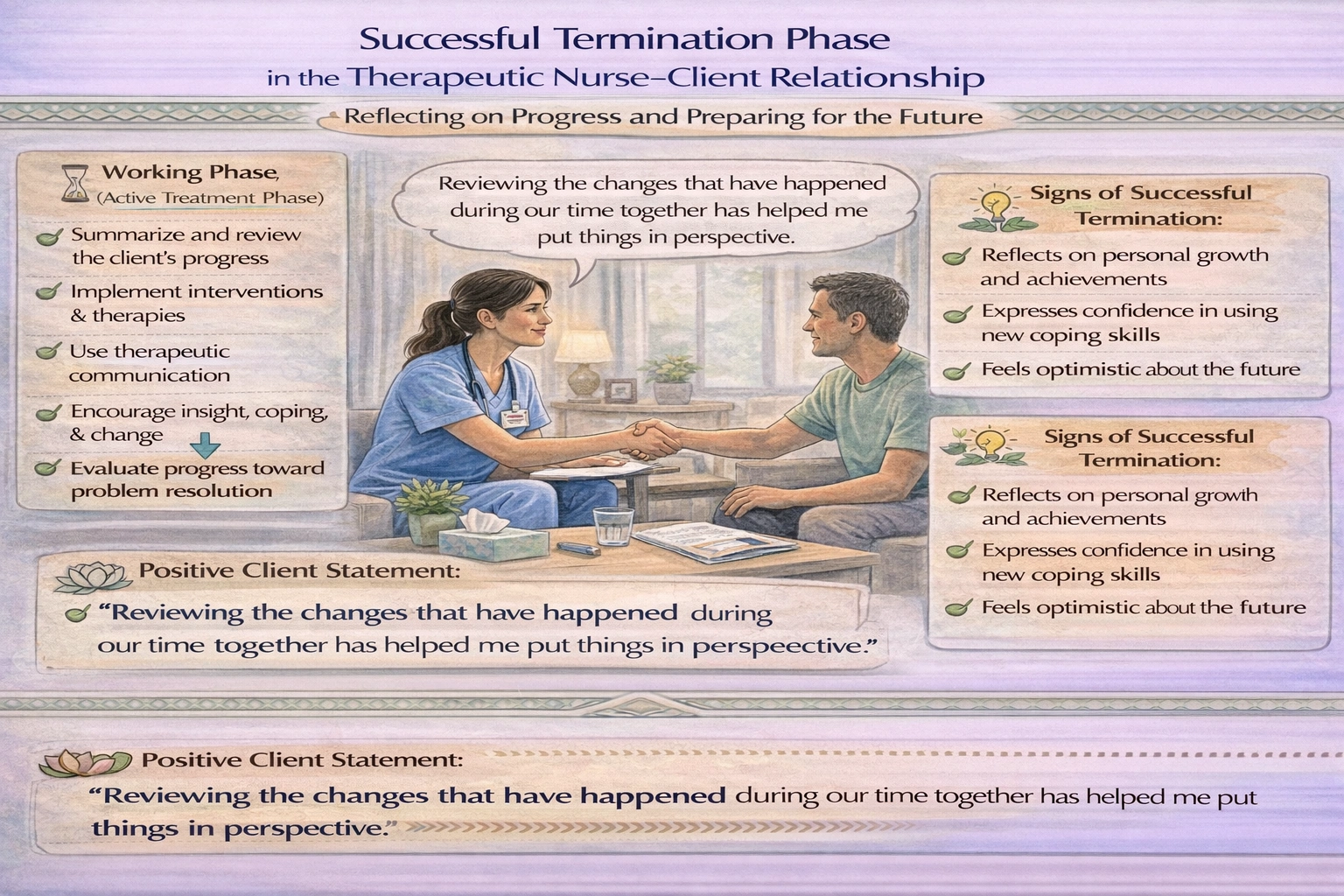
Which client statement indicates that termination of the therapeutic nurseclient relationship has been handled successfully?
A.
I know I can count on you for continued support.
B. I am looking forward to discharge, but I am surprised that we will no longer work together.
C. Reviewing the changes that have happened during our time together has helped me put things in perspective.
D. I dont know how comfortable I will feel when talking to someone else.
Rationale
The statement that best answers "Which client statement indicates that termination of the therapeutic nurseclient relationship has been handled successfully" is "Reviewing the changes that have happened during our time together has helped me put things in perspective.".
A. I know I can count on you for continued support.
This choice misses the priority of the question and would lead the nurse away from the best clinical judgment. Here, "I know I can count on you for continued support." pulls the nurse away from the stem's cue ("Which client statement indicates that termination of the therapeutic nurseclient..."). Clinically, this would risk misinterpretation because it is not grounded in the presented data.
B. I am looking forward to discharge, but I am surprised that we will no longer work together.
This choice is off-target for what the stem is asking. It may be loosely connected, but it doesn't match the priority concept. The statement "I am looking forward to discharge, but I am surprised that we will no longer work together." is not supported by the scenario ("Which client statement indicates that termination of the therapeutic nurseclient..."). In practice, the clinician should stay with assessment cues and culturally safe interpretation.
C. Reviewing the changes that have happened during our time together has helped me put things in perspective.
This answer is supported by the stem and aligns with safe, client-centered nursing care. It responds to "Which client statement indicates that termination of the therapeutic clinicianclient..." without stereotyping the client or shifting to a different concept. Clinically, it helps preserve rapport while interpreting behavior through context.
D. I dont know how comfortable I will feel when talking to someone else.
This choice misses the focus of the question and would lead the nurse away from the best clinical judgment. Here, "I dont know how comfortable I will feel when talking to someone else." pulls the nurse away from the stem's cue ("Which client statement indicates that termination of the therapeutic nurseclient..."). In practice, the nurse should stay with assessment cues and culturally safe interpretation.
**Conclusion**
The focus of this question is Which client statement indicates that termination of the therapeutic nurseclient relationship has been handled.... The most appropriate response is Reviewing the changes that have happened during our time together has helped me put..., which aligns with the concept tested in the scenario. The better reasoning here is the one that connects directly to the scenario details and the concept being tested. In practice, this approach supports accurate assessment and respectful, client-centered care.
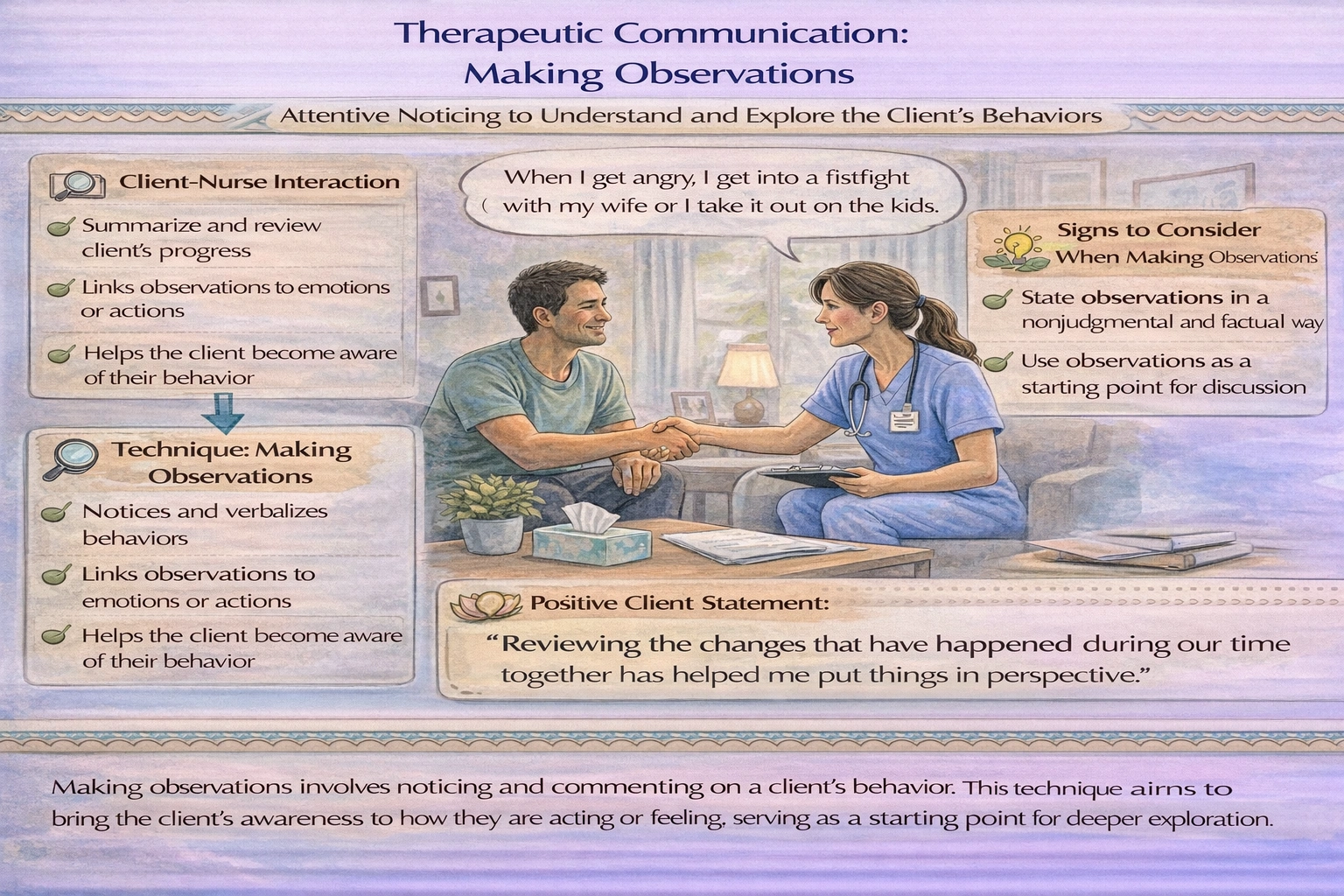
Which therapeutic communication technique is being used in this nurseclient interaction? Client: When I get angry, I get into a fistfight with my wife or I take it out on the kids. Nurse: I notice that you are smiling as you talk about this physical violence.
A.
Encouraging comparison
B. Exploring
C. Formulating a plan of action
D. Making observations
Rationale
The answer to "When I get angry, I get into a fistfight with my wife or I take it out on the kids. Nurse: I notice that you are smiling as you talk about this physical violence." is "Making observations".
A. Encouraging comparison
This option is off-target for what the stem is asking. It may be loosely connected, but it doesn't match the priority concept. Compared with the stem ("Which therapeutic communication technique is being used in this nurseclient..."), this choice introduces a different emphasis ("Encouraging comparison"). In practice, the nurse should stay with assessment cues and culturally safe interpretation.
B. Exploring
This option is off-target for what the stem is asking. It may be loosely connected, but it doesn't match the priority concept. This answer centers "Exploring," but the stem highlights "Which therapeutic communication technique is being used in this nurseclient...." In practice, the nurse should stay with assessment cues and culturally safe interpretation.
C. Formulating a plan of action
This choice misses the focus of the question and would lead the nurse away from the best clinical judgment. Compared with the stem ("Which therapeutic communication technique is being used in this nurseclient..."), this choice introduces a different emphasis ("Formulating a plan of action"). Choose the option that answers the question directly without adding extra assumptions.
D. Making observations
This is the best answer because it directly reflects the key cue in the stem. It addresses the stem's focus ("Which therapeutic communication technique is being used in this clinicianclient...") in a straightforward way. Clinically, it helps preserve rapport while interpreting behavior through context.
**Conclusion**
This item centers on Which therapeutic communication technique is being used in this nurseclient interaction? Client: When I get angry, I... Making observations. The better reasoning here is the one that connects directly to the scenario details and the concept being tested. This interpretation promotes culturally safe care and reduces the risk of misunderstanding client behavior.
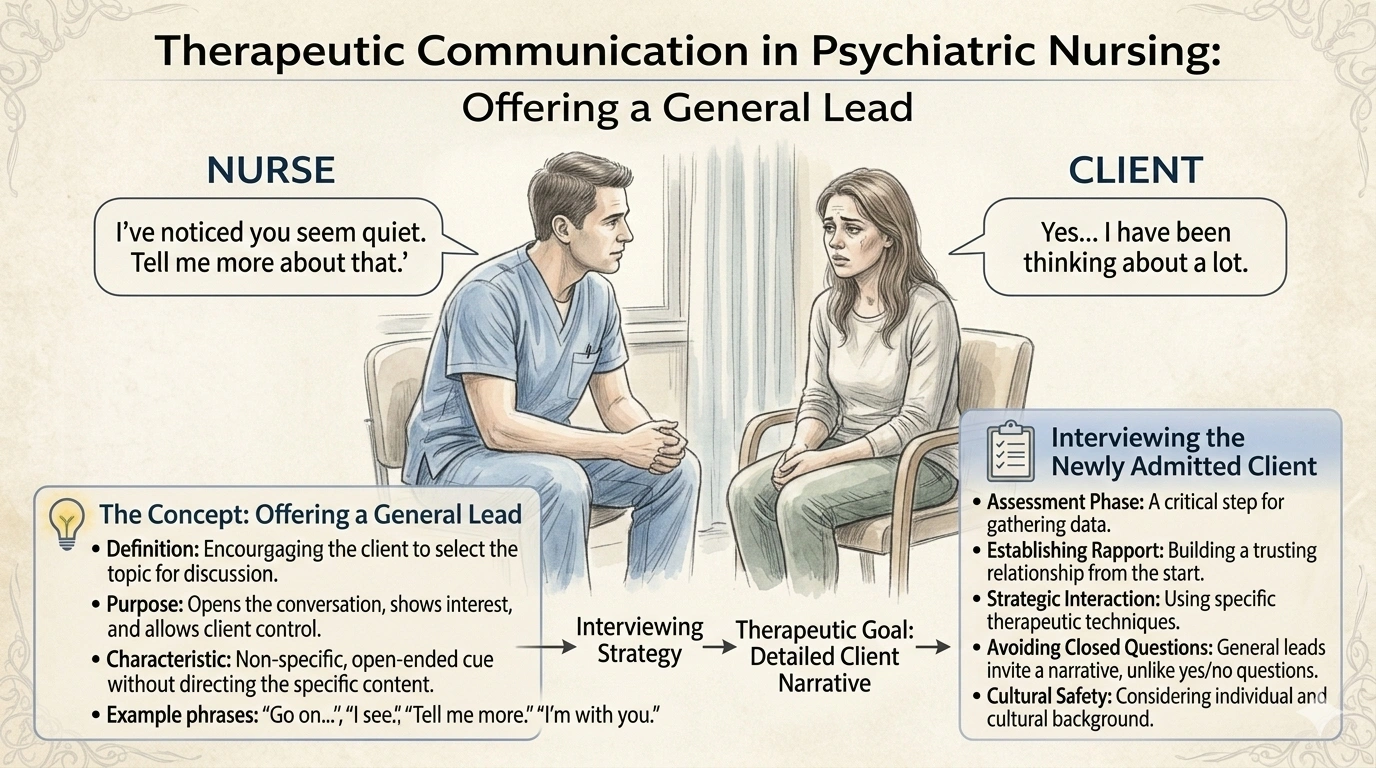
The nurse is interviewing a newly admitted psychiatric client. Which nursing statement is an example of offering a general lead?
A.
Do you know why you are here?
B. Are you feeling depressed or anxious?
C. Yes, I see. Go on.
D.
Rationale
The nursing statement that answers the question is "".
A. Do you know why you are here?
This option is off-target for what the stem is asking. It may be loosely connected, but it doesn't match the priority concept. Here, "Do you know why you are here?" pulls the nurse away from the stem's cue ("The nurse is interviewing a newly admitted psychiatric client. Which nursing statement..."). Clinically, this would risk misinterpretation because it is not grounded in the presented data.
B. Are you feeling depressed or anxious?
This option is off-target for what the stem is asking. It may be loosely connected, but it doesn't match the priority concept. This answer centers "Are you feeling depressed or anxious?," but the stem highlights "The nurse is interviewing a newly admitted psychiatric client. Which nursing statement...." In practice, the nurse should stay with assessment cues and culturally safe interpretation.
C. Yes, I see. Go on.
This choice misses the focus of the question and would lead the nurse away from the best clinical judgment. Here, "Yes, I see. Go on." pulls the nurse away from the stem's cue ("The nurse is interviewing a newly admitted psychiatric client. Which nursing statement..."). Clinically, this would risk misinterpretation because it is not grounded in the presented data.
**Conclusion**
This item centers on The nurse is interviewing a newly admitted psychiatric client. Which nursing statement is an example of offering a.... The correct response should be the one that addresses the concept being tested using only the information given. The better reasoning here is the one that connects directly to the scenario details and the concept being tested. Clinically, this reasoning helps maintain rapport while guiding safe nursing decision-making.
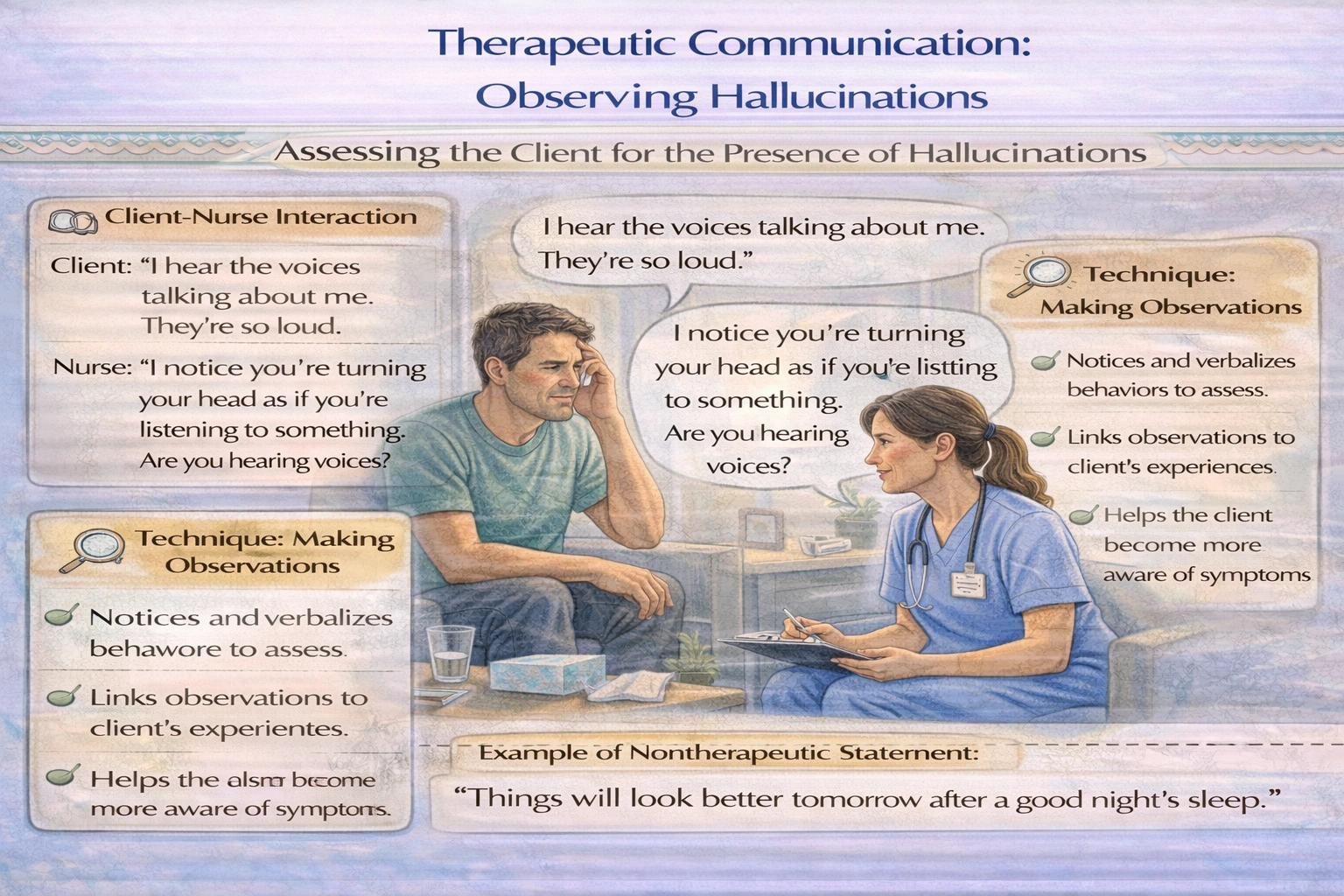
A nurse is assessing a client diagnosed with schizophrenia for the presence of hallucinations. Which therapeutic communication technique used by the nurse is an example of making observations?
A.
B.
C.
D.
Rationale
The therapeutic communication technique being used is "".
**Conclusion**
The focus of this question is A nurse is assessing a client diagnosed with schizophrenia for the presence of hallucinations. Which therapeutic.... The best answer will be the choice that directly matches the scenario and the concept being assessed. The strongest answers in this set stay closely tied to what is stated in the scenario and avoid adding extra meaning. This interpretation promotes culturally safe care and reduces the risk of misunderstanding client behavior.
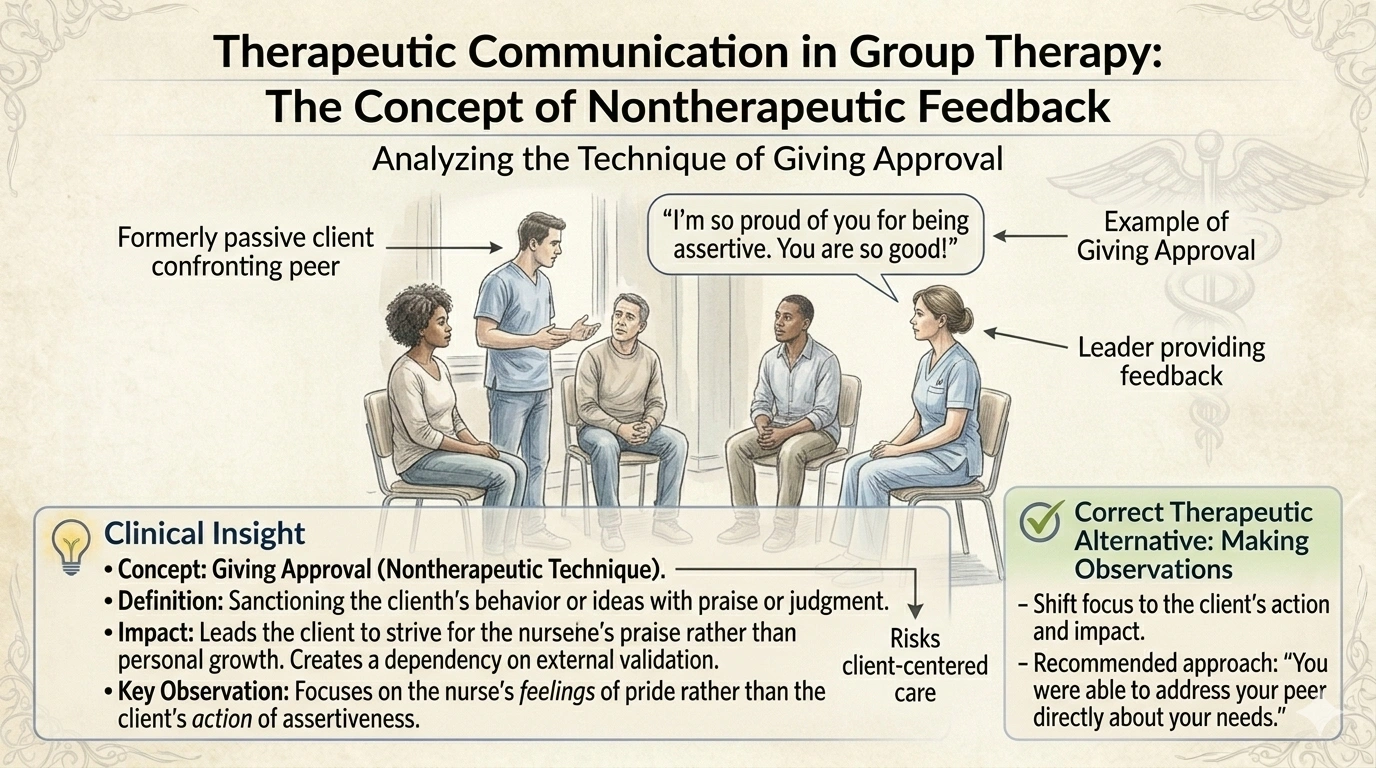
After assertiveness training, a formerly passive client appropriately confronts a peer in group therapy. The group leader states, Im so proud of you for being assertive. You are so good! Which communication technique has the leader employed?
A.
The nontherapeutic technique of giving approval
B. The nontherapeutic technique of interpreting
C. The therapeutic technique of presenting reality
D. The therapeutic technique of making observations
Rationale
The answer to "Which communication technique has the leader employed" is "The nontherapeutic technique of giving approval".
A. The nontherapeutic technique of giving approval
This is the best answer because it directly reflects the key cue in the stem. It addresses the stem's focus ("After assertiveness training, a formerly passive client appropriately confronts a peer...") in a straightforward way. It promotes safe decision-making by basing interpretation on observable data.
B. The nontherapeutic technique of interpreting
This option is off-target for what the stem is asking. It may be loosely connected, but it doesn't match the priority concept. Compared with the stem ("After assertiveness training, a formerly passive client appropriately confronts a peer..."), this choice introduces a different emphasis ("The nontherapeutic technique of interpreting"). Clinically, this would risk misinterpretation because it is not grounded in the presented data.
C. The therapeutic technique of presenting reality
This answer does not address the stem's main point. It either answers a different question or adds meaning not provided in the scenario. Compared with the stem ("After assertiveness training, a formerly passive client appropriately confronts a peer..."), this choice introduces a different emphasis ("The therapeutic technique of presenting reality"). Clinically, this would risk misinterpretation because it is not grounded in the presented data.
D. The therapeutic technique of making observations
This choice misses the focus of the question and would lead the nurse away from the best clinical judgment. Here, "The therapeutic technique of making observations" pulls the nurse away from the stem's cue ("After assertiveness training, a formerly passive client appropriately confronts a peer..."). Clinically, this would risk misinterpretation because it is not grounded in the presented data.
**Conclusion**
The scenario emphasizes After assertiveness training, a formerly passive client appropriately confronts a peer in group therapy. The group... The nontherapeutic technique of giving approval. The better reasoning here is the one that connects directly to the scenario details and the concept being tested. In practice, this approach supports accurate assessment and respectful, client-centered care.
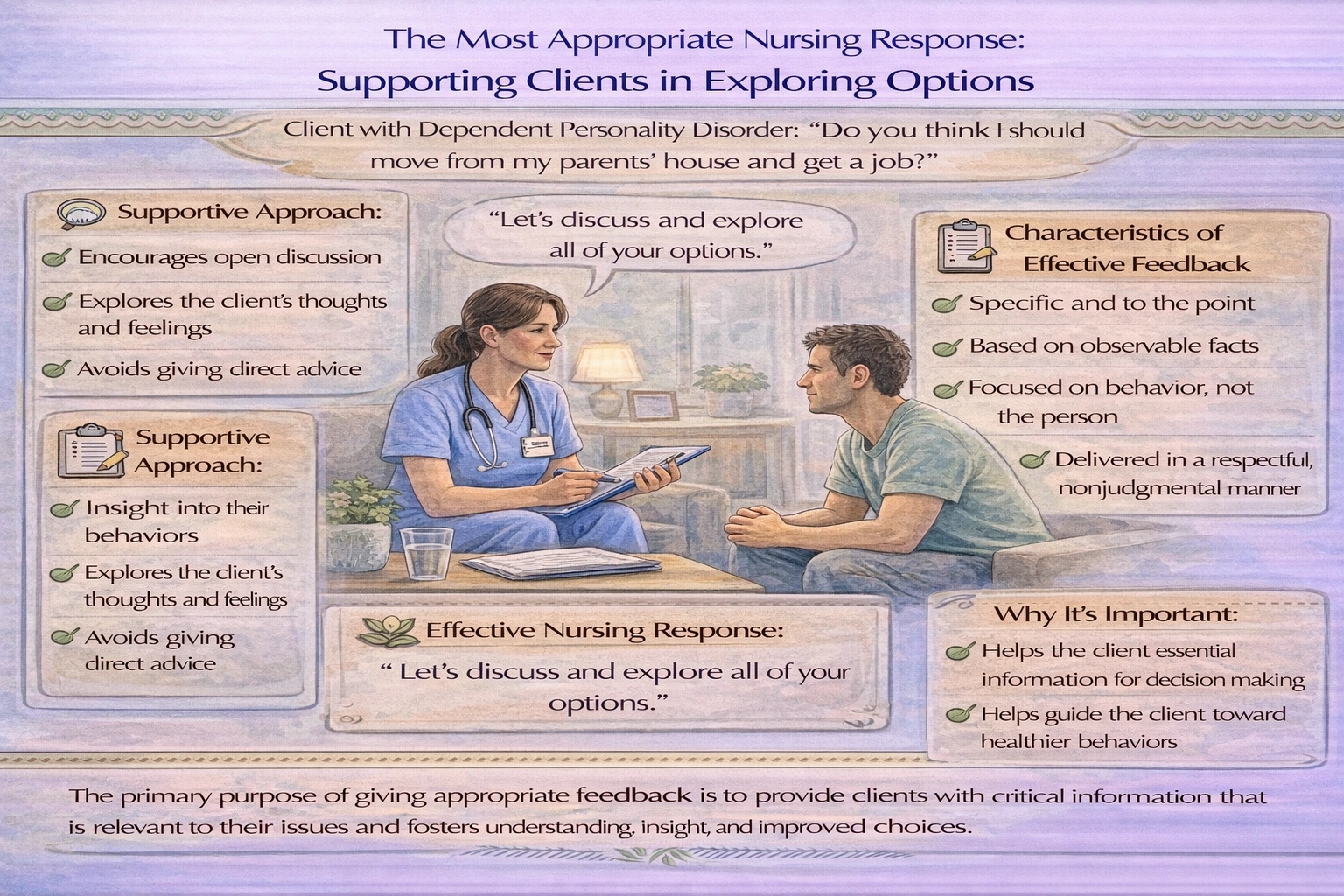
A client diagnosed with dependent personality disorder states, Do you think I should move from my parents house and get a job? Which nursing response is most appropriate?
A.
It would be best to do that in order to increase independence.
B. Why would you want to leave a secure home?
C. Lets discuss and explore all of your options.
D. Im afraid you would feel very guilty leaving your parents.
Rationale
For "Which nursing response is most appropriate," the best answer is "Lets discuss and explore all of your options.".
A. It would be best to do that in order to increase independence.
This choice misses the focus of the question and would lead the nurse away from the best clinical judgment. This answer centers "It would be best to do that in order to increase independence.," but the stem highlights "A client diagnosed with dependent personality disorder states, Do you think I should...." In practice, the nurse should stay with assessment cues and culturally safe interpretation.
B. Why would you want to leave a secure home?
This option is off-target for what the stem is asking. It may be loosely connected, but it doesn't match the priority concept. The statement "Why would you want to leave a secure home?" is not supported by the scenario ("A client diagnosed with dependent personality disorder states, Do you think I should..."). In practice, the clinician should stay with assessment cues and culturally safe interpretation.
C. Lets discuss and explore all of your options.
This is the best answer because it directly reflects the key cue in the stem. It responds to "A client diagnosed with dependent personality disorder states, Do you think I should..." without stereotyping the client or shifting to a different concept. Clinically, it helps preserve rapport while interpreting behavior through context.
D. Im afraid you would feel very guilty leaving your parents.
This choice is off-target for what the stem is asking. It may be loosely connected, but it doesn't match the priority concept. Here, "Im afraid you would feel very guilty leaving your parents." pulls the nurse away from the stem's cue ("A client diagnosed with dependent personality disorder states, Do you think I should..."). Clinically, this would risk misinterpretation because it is not grounded in the presented data.
**Conclusion**
The scenario emphasizes A client diagnosed with dependent personality disorder states, Do you think I should move from my parents house and.... The most appropriate response is Lets discuss and explore all of your options., which aligns with the concept tested in the scenario. The strongest answers in this set stay closely tied to what is stated in the scenario and avoid adding extra meaning. In practice, this approach supports accurate assessment and respectful, client-centered care.
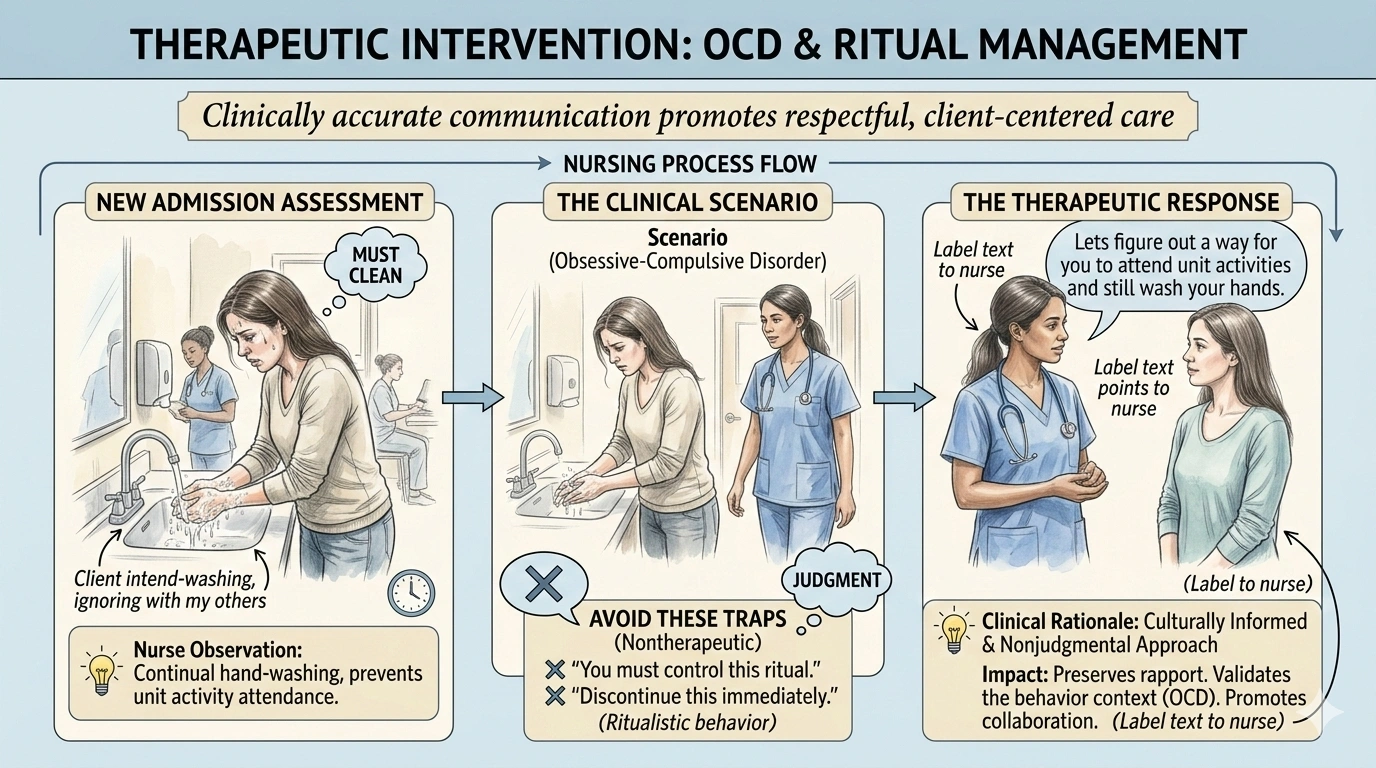
A newly admitted client diagnosed with obsessive-compulsive disorder (OCD) washes hands continually. This behavior prevents unit activity attendance. Which nursing statement best addresses this situation?
A.
Everyone diagnosed with OCD needs to control their ritualistic behaviors.
B. It is important for you to discontinue these ritualistic behaviors.
C. Why are you asking for help if you wont participate in unit therapy?
D. Lets figure out a way for you to attend unit activities and still wash your hands.
Rationale
The nursing statement that answers the question is "Lets figure out a way for you to attend unit activities and still wash your hands.".
A. Everyone diagnosed with OCD needs to control their ritualistic behaviors.
This answer does not address the stem's main point. It either answers a different question or adds meaning not provided in the scenario. Here, "Everyone diagnosed with OCD needs to control their ritualistic behaviors." pulls the nurse away from the stem's cue ("A newly admitted client diagnosed with obsessive-compulsive disorder (OCD) washes..."). In practice, the nurse should stay with assessment cues and culturally safe interpretation.
B. It is important for you to discontinue these ritualistic behaviors.
This option is off-target for what the stem is asking. It may be loosely connected, but it doesn't match the priority concept. Here, "It is important for you to discontinue these ritualistic behaviors." pulls the nurse away from the stem's cue ("A newly admitted client diagnosed with obsessive-compulsive disorder (OCD) washes..."). In practice, the nurse should stay with assessment cues and culturally safe interpretation.
C. Why are you asking for help if you wont participate in unit therapy?
This choice is off-target for what the stem is asking. It may be loosely connected, but it doesn't match the priority concept. This answer centers "Why are you asking for help if you wont participate in unit therapy?," but the stem highlights "A newly admitted client diagnosed with obsessive-compulsive disorder (OCD) washes...." A good elimination step is to remove choices that stereotype or drift away from the stem's priority.
D. Lets figure out a way for you to attend unit activities and still wash your hands.
This is the strongest option because it applies culturally informed, nonjudgmental nursing interpretation. It matches what the stem emphasizes ("A newly admitted client diagnosed with obsessive-compulsive disorder (OCD) washes...") and guides appropriate nursing judgment. Clinically, it helps preserve rapport while interpreting behavior through context.
**Conclusion**
The scenario emphasizes A newly admitted client diagnosed with obsessive-compulsive disorder (OCD) washes hands continually. This behavior.... The best-supported answer is Lets figure out a way for you to attend unit activities and still wash your hands., because it matches the situation described. The better reasoning here is the one that connects directly to the scenario details and the concept being tested. In practice, this approach supports accurate assessment and respectful, client-centered care.
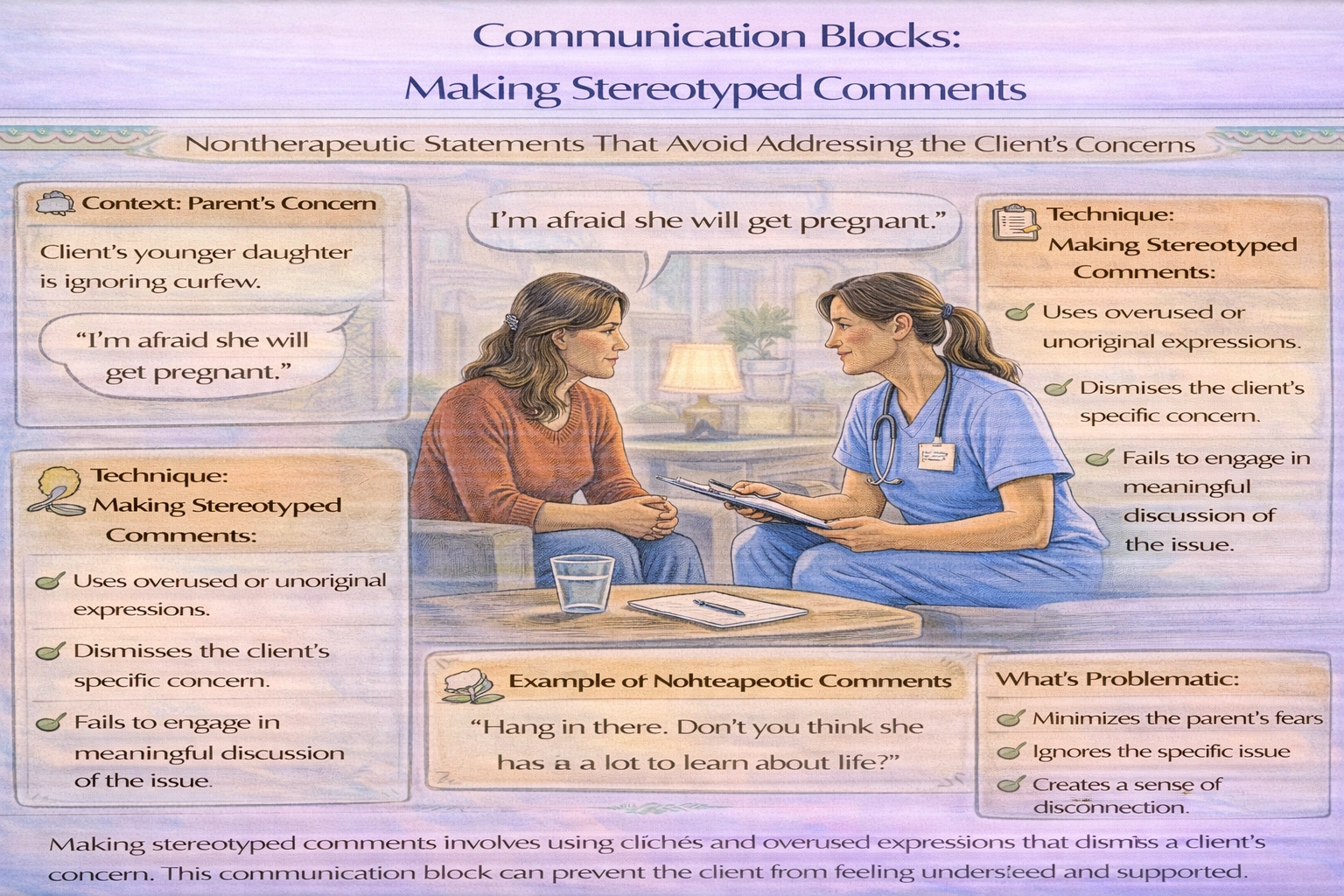
A clients younger daughter is ignoring curfew. The client states, Im afraid she will get pregnant. The nurse responds, Hang in there. Dont you think she has a lot to learn about life? This is an example of which communication block?
A.
Requesting an explanation
B. Belittling the client
C. Making stereotyped comments
D. Probing
Rationale
The most appropriate selection for "A clients younger daughter is ignoring curfew. The client states, Im afraid she will get pregnant. The nurse responds, Hang in there. Dont you think she has a lot to learn about life? This is an example of which communication block" is "Making stereotyped comments".
A. Requesting an explanation
This answer does not address the stem's main point. It either answers a different question or adds meaning not provided in the scenario. The statement "Requesting an explanation" is not supported by the scenario ("A clients younger daughter is ignoring curfew. The client states, Im afraid she will..."). Choose the option that answers the question directly without adding extra assumptions.
B. Belittling the client
This answer does not address the stem's main point. It either answers a different question or adds meaning not provided in the situation. Compared with the stem ("A clients younger daughter is ignoring curfew. The client states, Im afraid she will..."), this choice introduces a different emphasis ("Belittling the client"). Clinically, this would risk misinterpretation because it is not grounded in the presented data.
C. Making stereotyped comments
This is the strongest option because it applies culturally informed, nonjudgmental nursing interpretation. It addresses the stem's focus ("A clients younger daughter is ignoring curfew. The client states, Im afraid she will...") in a straightforward way. In practice, this supports respectful communication and accurate assessment.
D. Probing
This choice misses the priority of the question and would lead the nurse away from the best clinical judgment. Compared with the stem ("A clients younger daughter is ignoring curfew. The client states, Im afraid she will..."), this choice introduces a different emphasis ("Probing"). Clinically, this would risk misinterpretation because it is not grounded in the presented data.
**Conclusion**
The focus of this question is A clients younger daughter is ignoring curfew. The client states, Im afraid she will get pregnant. The nurse responds,.... The best-supported answer is Making stereotyped comments, because it matches the situation described. The better reasoning here is the one that connects directly to the scenario details and the concept being tested. This interpretation promotes culturally safe care and reduces the risk of misunderstanding client behavior.
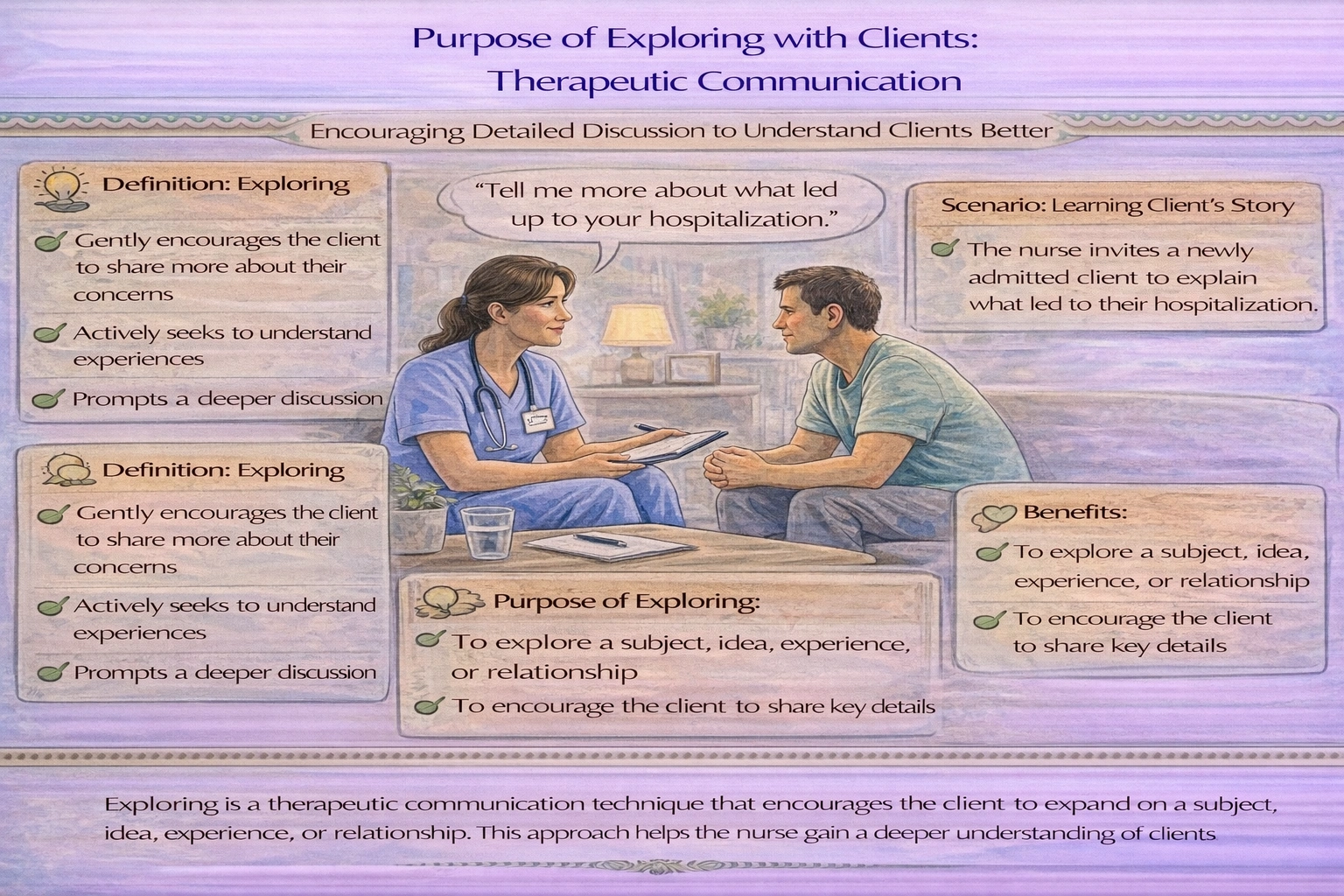
The nurse says to a newly admitted client, Tell me more about what led up to your hospitalization. What is the purpose of this therapeutic communication technique?
A.
To reframe the clients thoughts about mental health treatment
B. To put the client at ease
C. To explore a subject, idea, experience, or relationship
D. To communicate that the nurse is listening to the conversation
Rationale
The purpose being asked about is "To explore a subject, idea, experience, or relationship".
A. To reframe the clients thoughts about mental health treatment
This option is off-target for what the stem is asking. It may be loosely connected, but it doesn't match the priority concept. This answer centers "To reframe the clients thoughts about mental health treatment," but the stem highlights "The nurse says to a newly admitted client, Tell me more about what led up to your...." Clinically, this would risk misinterpretation because it is not grounded in the presented data.
B. To put the client at ease
This choice is off-target for what the stem is asking. It may be loosely connected, but it doesn't match the priority concept. Compared with the stem ("The nurse says to a newly admitted client, Tell me more about what led up to your..."), this choice introduces a different emphasis ("To put the client at ease"). Choose the choice that answers the question directly without adding extra assumptions.
C. To explore a subject, idea, experience, or relationship
This choice fits because it stays grounded in the scenario and avoids added assumptions. It addresses the stem's focus ("The nurse says to a newly admitted client, Tell me more about what led up to your...") in a straightforward way. In practice, this supports respectful communication and accurate assessment.
D. To communicate that the nurse is listening to the conversation
This choice is off-target for what the stem is asking. It may be loosely connected, but it doesn't match the priority concept. The statement "To communicate that the nurse is listening to the conversation" is not supported by the scenario ("The nurse says to a newly admitted client, Tell me more about what led up to your..."). In practice, the nurse should stay with assessment cues and culturally safe interpretation.
**Conclusion**
In this situation, the main issue is The nurse says to a newly admitted client, Tell me more about what led up to your hospitalization. What is the purpose... To explore a subject, idea, experience, or relationship. The strongest answers in this set stay closely tied to what is stated in the scenario and avoid adding extra meaning. This interpretation promotes culturally safe care and reduces the risk of misunderstanding client behavior.
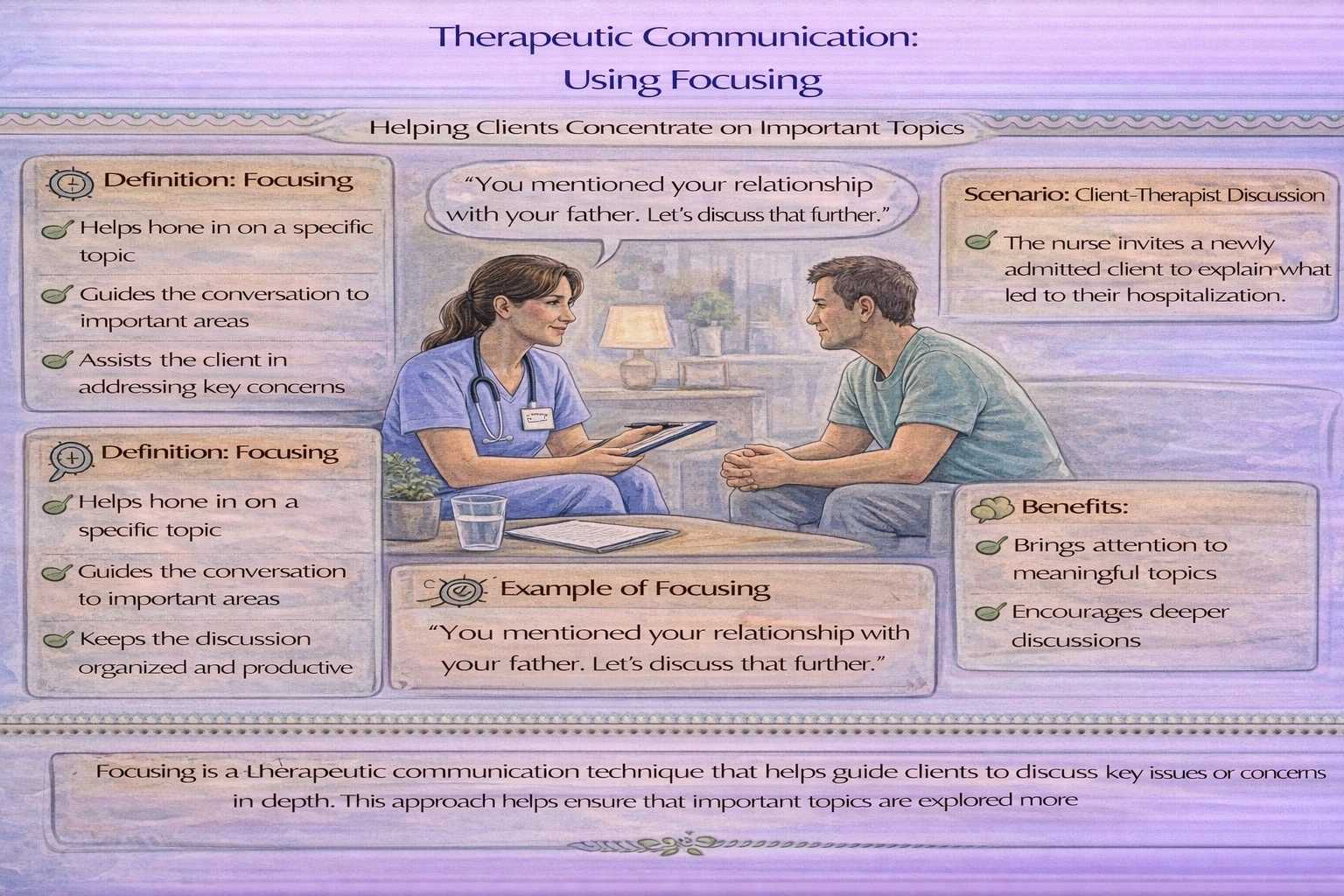
Which nursing statement is a good example of the therapeutic communication technique of focusing?
A.
Describe one of the best things that happened to you this week.
B. Im having a difficult time understanding what you mean.
C. Your counseling session is in 30 minutes. Ill stay with you until then.
D. You mentioned your relationship with your father. Lets discuss that further.
Rationale
The nursing statement that answers the question is "You mentioned your relationship with your father. Lets discuss that further.".
A. Describe one of the best things that happened to you this week.
This choice is off-target for what the stem is asking. It may be loosely connected, but it doesn't match the priority concept. The statement "Describe one of the best things that happened to you this week." is not supported by the scenario ("Which nursing statement is a good example of the therapeutic communication technique..."). A good elimination step is to remove choices that stereotype or drift away from the stem's priority.
B. Im having a difficult time understanding what you mean.
This choice misses the focus of the question and would lead the nurse away from the best clinical judgment. This answer centers "Im having a difficult time understanding what you mean.," but the stem highlights "Which nursing statement is a good example of the therapeutic communication technique...." In practice, the nurse should stay with assessment cues and culturally safe interpretation.
C. Your counseling session is in 30 minutes. Ill stay with you until then.
This option is off-target for what the stem is asking. It may be loosely connected, but it doesn't match the priority concept. The statement "Your counseling session is in 30 minutes. Ill stay with you until then." is not supported by the scenario ("Which nursing statement is a good example of the therapeutic communication technique..."). Choose the option that answers the question directly without adding extra assumptions.
D. You mentioned your relationship with your father. Lets discuss that further.
This is the strongest option because it applies culturally informed, nonjudgmental nursing interpretation. It matches what the stem emphasizes ("Which nursing statement is a good example of the therapeutic communication technique...") and guides appropriate nursing judgment. In practice, this supports respectful communication and accurate assessment.
**Conclusion**
This item centers on Which nursing statement is a good example of the therapeutic communication technique of focusing? You mentioned your relationship with your father. Lets discuss that further.. The strongest answers in this set stay closely tied to what is stated in the scenario and avoid adding extra meaning. This interpretation promotes culturally safe care and reduces the risk of misunderstanding client behavior.
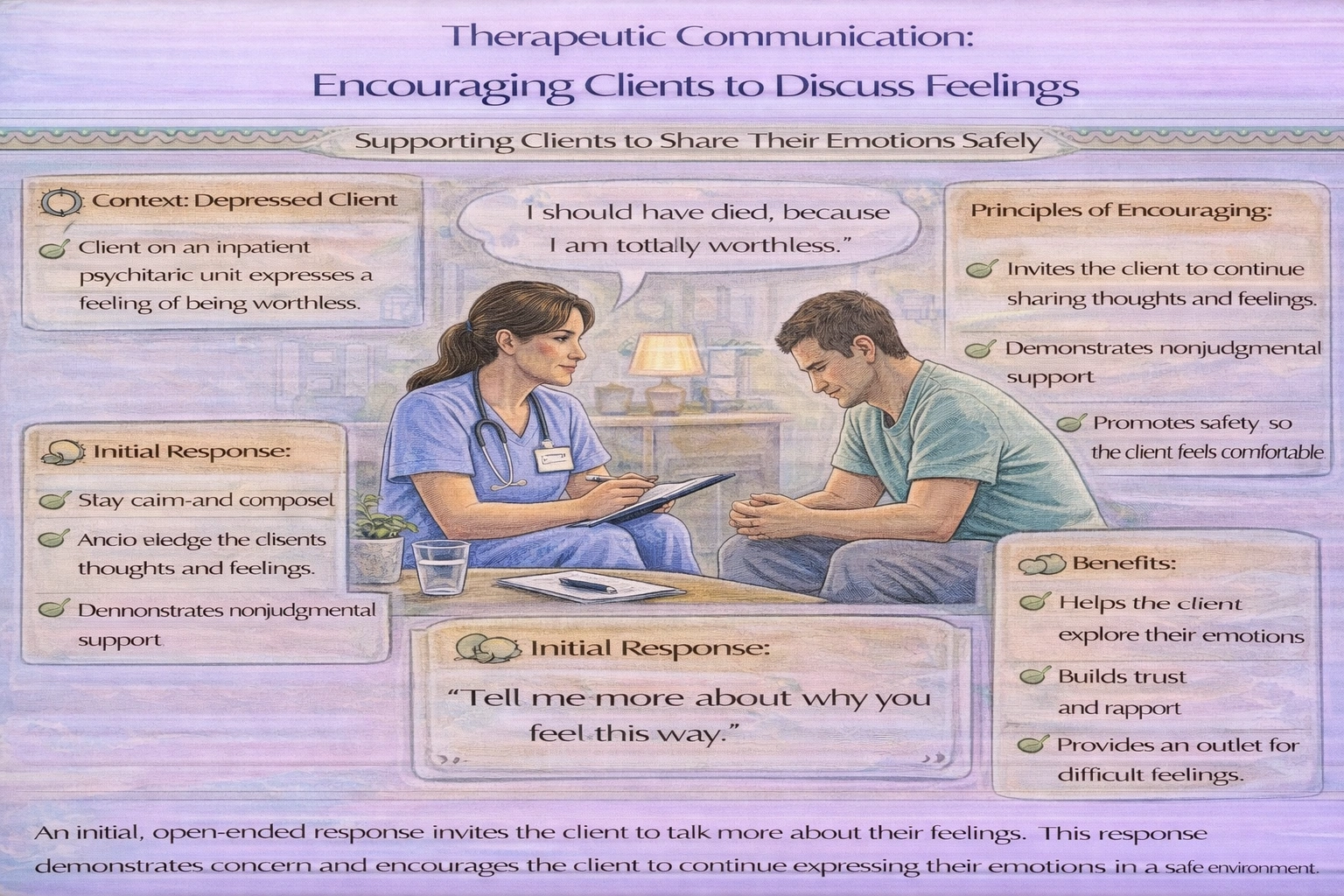
A client on an inpatient psychiatric unit tells the nurse, I should have died, because I am totally worthless. In order to encourage the client to continue talking about feelings, which should be the nursing initial response?
A.
How would your family feel if you died?
B. You feel worthless now, but that can change with time.
C.
D.
Rationale
The most appropriate selection for "A client on an inpatient psychiatric unit tells the nurse, I should have died, because I am totally worthless. In order to encourage the client to continue talking about feelings, which should be the nursing initial response" is "".
A. How would your family feel if you died?
This choice misses the focus of the question and would lead the nurse away from the best clinical judgment. The statement "How would your family feel if you died?" is not supported by the scenario ("A client on an inpatient psychiatric unit tells the nurse, I should have died, because..."). Clinically, this would risk misinterpretation because it is not grounded in the presented data.
B. You feel worthless now, but that can change with time.
This choice misses the focus of the question and would lead the nurse away from the best clinical judgment. This answer centers "You feel worthless now, but that can change with time.," but the stem highlights "A client on an inpatient psychiatric unit tells the nurse, I should have died, because...." Choose the choice that answers the question directly without adding extra assumptions.
**Conclusion**
This item centers on A client on an inpatient psychiatric unit tells the nurse, I should have died, because I am totally worthless. In.... The best answer will be the choice that directly matches the scenario and the concept being assessed. The better reasoning here is the one that connects directly to the scenario details and the concept being tested. This interpretation promotes culturally safe care and reduces the risk of misunderstanding client behavior.
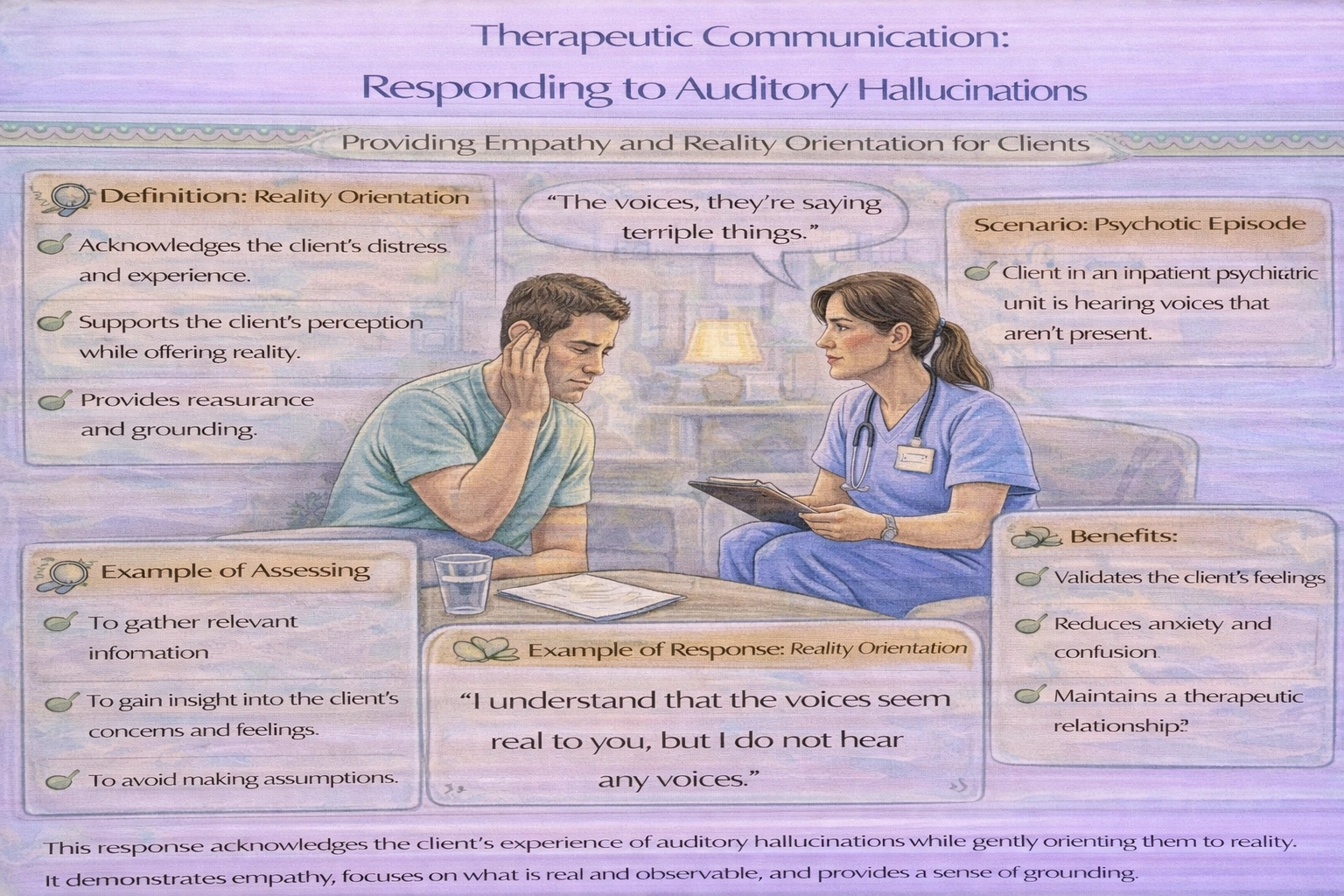
Which therapeutic communication technique should the nurse use when communicating with a client who is experiencing auditory hallucinations?
A.
My sister has the same diagnosis as you and she also hears voices.
B. I understand that the voices seem real to you, but I do not hear any voices.
C. Why not turn up the radio so that the voices are muted.
D. I wouldnt worry about these voices. The medication will make them disappear.
Rationale
The therapeutic communication technique being used is "I understand that the voices seem real to you, but I do not hear any voices.".
A. My sister has the same diagnosis as you and she also hears voices.
This choice is off-target for what the stem is asking. It may be loosely connected, but it doesn't match the priority concept. This answer centers "My sister has the same diagnosis as you and she also hears voices.," but the stem highlights "Which therapeutic communication technique should the nurse use when communicating with...." A good elimination step is to remove choices that stereotype or drift away from the stem's priority.
B. I understand that the voices seem real to you, but I do not hear any voices.
This choice fits because it stays grounded in the scenario and avoids added assumptions. It addresses the stem's focus ("Which therapeutic communication technique should the nurse use when communicating with...") in a straightforward way. From a nursing-process perspective, it prioritizes assessment and therapeutic effectiveness.
C. Why not turn up the radio so that the voices are muted.
This choice misses the focus of the question and would lead the clinician away from the best clinical judgment. The statement "Why not turn up the radio so that the voices are muted." is not supported by the scenario ("Which therapeutic communication technique should the nurse use when communicating with..."). Choose the option that answers the question directly without adding extra assumptions.
D. I wouldnt worry about these voices. The medication will make them disappear.
This choice misses the focus of the question and would lead the nurse away from the best clinical judgment. Compared with the stem ("Which therapeutic communication technique should the nurse use when communicating with..."), this choice introduces a different emphasis ("I wouldnt worry about these voices. The medication will make them disappear."). In practice, the nurse should stay with assessment cues and culturally safe interpretation.
**Conclusion**
In this situation, the main issue is Which therapeutic communication technique should the nurse use when communicating with a client who is experiencing.... The most appropriate response is I understand that the voices seem real to you, but I do not hear any voices., which aligns with the concept tested in the scenario. The better reasoning here is the one that connects directly to the scenario details and the concept being tested. In practice, this approach supports accurate assessment and respectful, client-centered care.
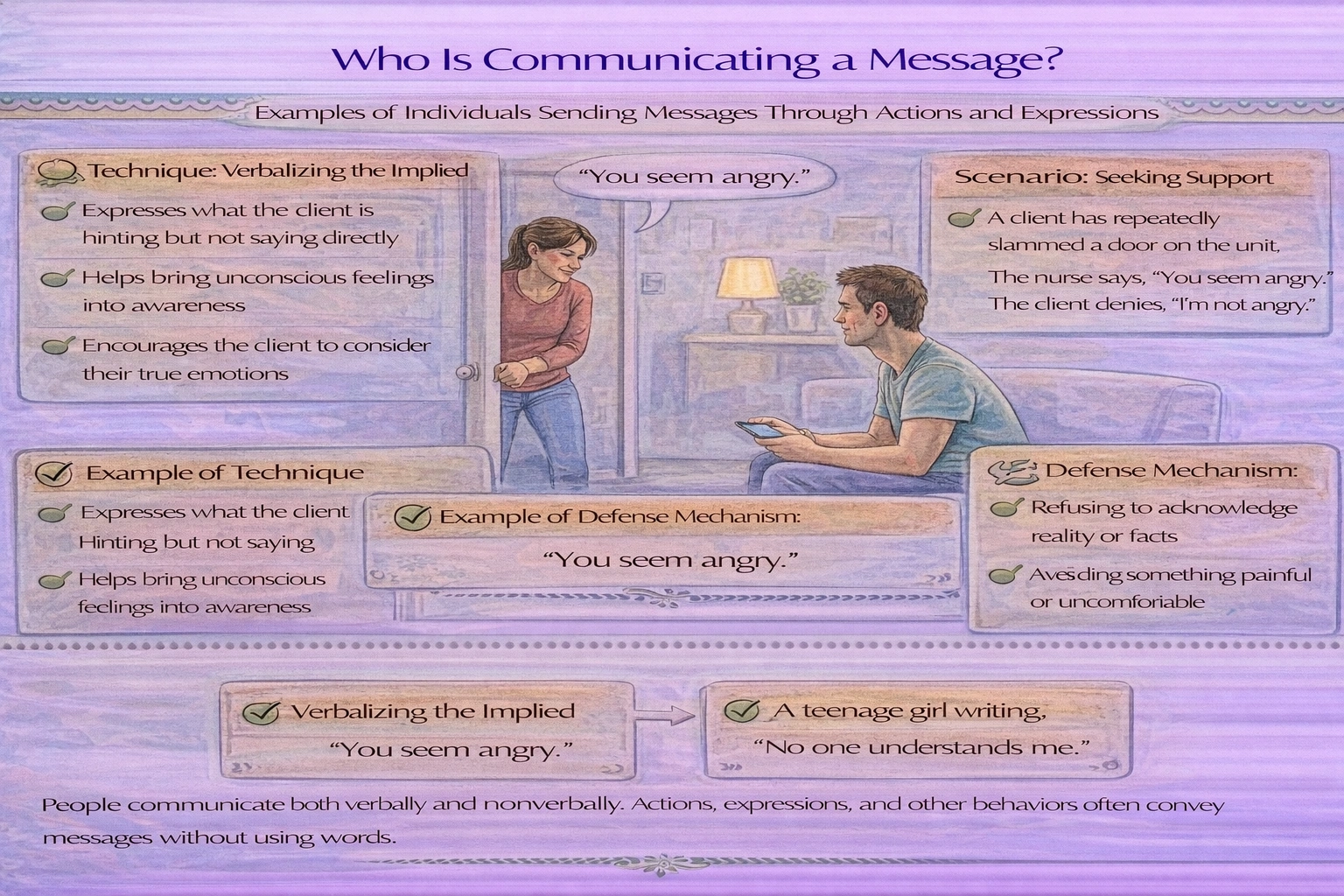
Which of the following individuals are communicating a message? Select all that apply.
A.
A mother spanking her son for playing with matches
B. A teenage boy isolating himself and playing loud music
C. A biker sporting an eagle tattoo on his biceps
D. A teenage girl writing, No one understands me
Rationale
The most appropriate selection for "Which of the following individuals are communicating a message? Select all that apply." is "A mother spanking her son for playing with matches, A teenage boy isolating himself and playing loud music, A biker sporting an eagle tattoo on his biceps, A teenage girl writing, No one understands me".
A. A mother spanking her son for playing with matches
This choice fits because it stays grounded in the scenario and avoids added assumptions. It keeps attention on "Which of the following individuals are communicating a message? Select all that apply.," which is what this item is testing. It promotes safe decision-making by basing interpretation on observable data.
B. A teenage boy isolating himself and playing loud music
This choice misses the focus of the question and would lead the nurse away from the best clinical judgment. This answer centers "A teenage boy isolating himself and playing loud music," but the stem highlights "Which of the following individuals are communicating a message? Select all that apply.." Clinically, this would risk misinterpretation because it is not grounded in the presented data.
C. A biker sporting an eagle tattoo on his biceps
This option is off-target for what the stem is asking. It may be loosely connected, but it doesn't match the priority concept. Compared with the stem ("Which of the following individuals are communicating a message? Select all that apply."), this choice introduces a different emphasis ("A biker sporting an eagle tattoo on his biceps"). Clinically, this would risk misinterpretation because it is not grounded in the presented data.
D. A teenage girl writing, No one understands me
This choice misses the priority of the question and would lead the nurse away from the best clinical judgment. Compared with the stem ("Which of the following individuals are communicating a message? Select all that apply."), this choice introduces a different emphasis ("A teenage girl writing, No one understands me"). Choose the option that answers the question directly without adding extra assumptions.
E. A father checking for new e-mail on a regular basis
This choice is off-target for what the stem is asking. It may be loosely connected, but it doesn't match the priority concept. This answer centers "A father checking for new e-mail on a regular basis," but the stem highlights "Which of the following individuals are communicating a message? Select all that apply.." Choose the option that answers the question directly without adding extra assumptions.
**Conclusion**
The focus of this question is Which of the following individuals are communicating a message? Select all that apply. A mother spanking her son for playing with matches; A teenage boy isolating himself and playing loud music; A biker sporting an eagle tattoo on his biceps; A teenage girl writing, No one understands me. The strongest answers in this set stay closely tied to what is stated in the scenario and avoid adding extra meaning. Clinically, this reasoning helps maintain rapport while guiding safe nursing decision-making.
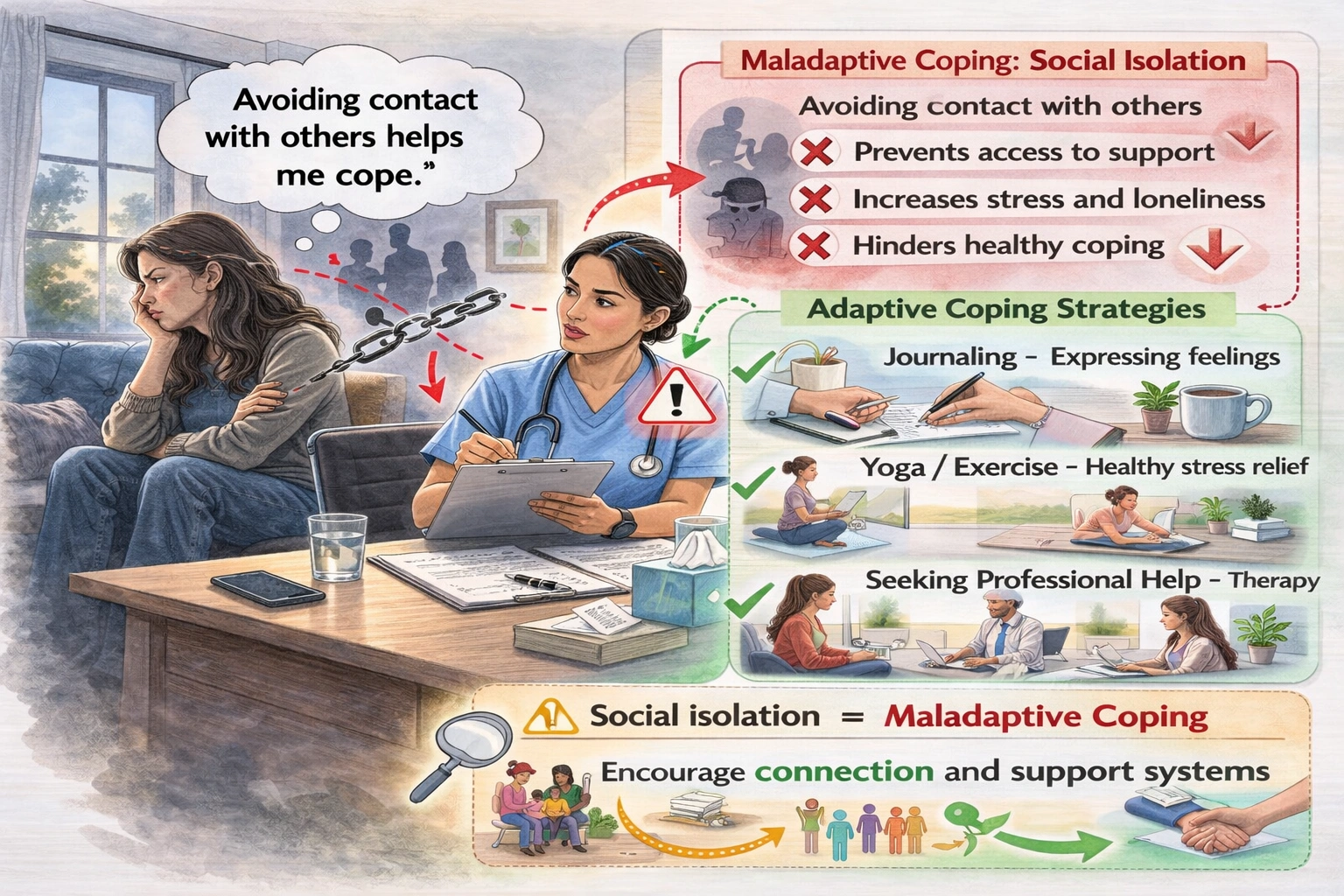
Which client statement should alert a nurse that a client may be responding maladaptively to stress?
A.
Ive found that avoiding contact with others helps me cope.
B. I really enjoy journaling; its my private time.
C. I signed up for a yoga class this week.
D. I made an appointment to meet with a therapist.
Rationale
Based on the information given, the response that addresses the question is Ive found that avoiding contact with others helps me cope..
A. Ive found that avoiding contact with others helps me cope.
This is supported by the detail that Reliance on social isolation as a coping mechanism is a maladaptive method to relieve stress. It can prevent learning appropriate coping skills and can prevent access to needed support systems. Need: Psychosocial Integrity The underlying principle in the stem is best addressed by choosing the response that is both specific to the cue provided and consistent with evidence-informed psychiatric nursing practice. From a nursing standpoint, this selection guides assessment and interventions toward what is most clinically meaningful in the moment—risk reduction, safety, accurate appraisal, and support for adaptive coping.
B. I really enjoy journaling; its my private time.
This could seem tempting if the idea in “I really enjoy journaling; its my private time.†addresses a different mechanism or priority than the one emphasized by the stem The wording does not track the stem’s main cue, so selecting it would shift the nurse away from the most precise interpretation or priority.
C. I signed up for a yoga class this week.
This reflects a related idea, but it fits best when the idea in “I signed up for a yoga class this week.†addresses a different mechanism or priority than the one emphasized by the stem The wording does not track the stem’s main cue, so selecting it would shift the nurse away from the most precise interpretation or priority.
D. I made an appointment to meet with a therapist.
This might be chosen when the idea in “I made an appointment to meet with a therapist.†addresses a different mechanism or priority than the one emphasized by the stem The wording does not track the stem’s main cue, so selecting it would shift the nurse away from the most precise interpretation or priority.
**Conclusion**
What separates the best choice from the rest is specificity: the correct option addresses the exact mechanism, stage, or principle described. The other answers relate to nearby ideas, yet they miss the question’s focal point or misapply the concept to the situation.
A bright student confides in the school nurse about conflicts related to attending college or working to add needed financial support to the family. Which coping strategy is most appropriate for the nurse to recommend to the student at this time?
A.
Meditation
B. Problem-solving training
C. Relaxation
D. Journaling
Rationale
The choice that aligns with the client data is Problem-solving training.
A. Meditation
This would apply in a different scenario where the idea in “Meditation†addresses a different mechanism or priority than the one emphasized by the stem The wording does not track the stem’s main cue, so selecting it would shift the nurse away from the most precise interpretation or priority.
B. Problem-solving training
This fits because The student must assess his or her situation and determine the best course of action. Problem-solving training, by providing structure and objectivity, can assist in decision making. Need: Psychosocial Integrity The underlying principle in the stem is best addressed by choosing the response that is both specific to the cue provided and consistent with evidence-informed psychiatric nursing practice. From a nursing standpoint, this selection guides assessment and interventions toward what is most clinically meaningful in the moment—risk reduction, safety, accurate appraisal, and support for adaptive coping.
C. Relaxation
This reflects a related idea, but it fits best when the idea in “Relaxation†addresses a different mechanism or priority than the one emphasized by the stem The wording does not track the stem’s main cue, so selecting it would shift the nurse away from the most precise interpretation or priority.
D. Journaling
This could seem tempting if the idea in “Journaling†addresses a different mechanism or priority than the one emphasized by the stem The wording does not track the stem’s main cue, so selecting it would shift the nurse away from the most precise interpretation or priority.
**Conclusion**
The scenario is best handled by identifying what the nurse must interpret or prioritize first and then choosing the statement that fits that requirement with the least distortion. The distractors have surface appeal, but they do not align as tightly with the clinical cue embedded in the stem.
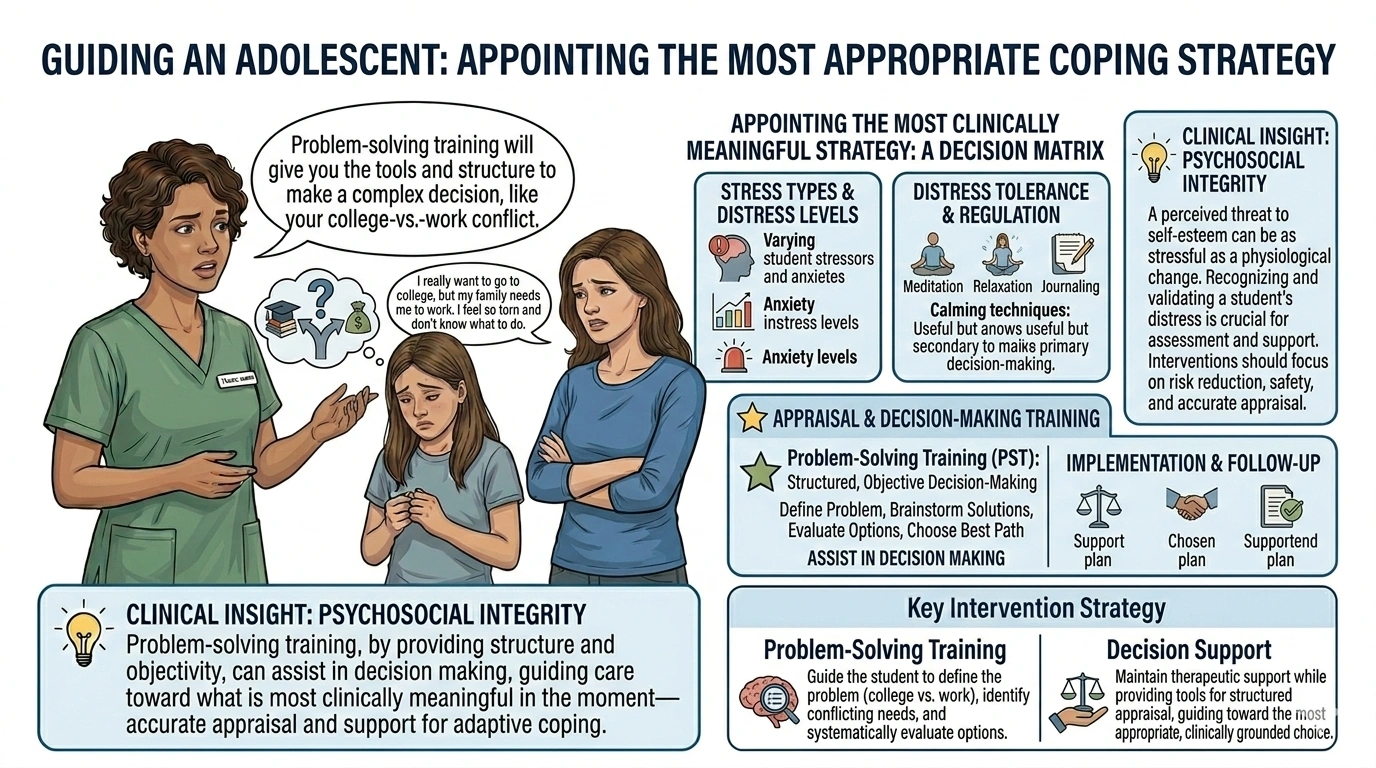
Meditation has been shown to be an effective stress management technique. When meditation is effective, what should a nurse expect to assess?
A.
An achieved state of relaxation
B. An achieved insight into ones feelings
C. A demonstration of appropriate role behaviors
D. An enhanced ability to problem-solve
Rationale
Based on the information given, the response that addresses the question is An achieved state of relaxation.
A. An achieved state of relaxation
This fits because Meditation produces relaxation by creating a special state of consciousness through focused concentration. Need: Psychosocial Integrity The underlying principle in the stem is best addressed by choosing the response that is both specific to the cue provided and consistent with evidence-informed psychiatric nursing practice. From a nursing standpoint, this selection guides assessment and interventions toward what is most clinically meaningful in the moment—risk reduction, safety, accurate appraisal, and support for adaptive coping.
B. An achieved insight into ones feelings
This reflects a related idea, but it fits best when the idea in “An achieved insight into ones feelings†addresses a different mechanism or priority than the one emphasized by the stem The wording does not track the stem’s main cue, so selecting it would shift the nurse away from the most precise interpretation or priority.
C. A demonstration of appropriate role behaviors
This might be chosen when the idea in “A demonstration of appropriate role behaviors†addresses a different mechanism or priority than the one emphasized by the stem The wording does not track the stem’s main cue, so selecting it would shift the nurse away from the most precise interpretation or priority.
D. An enhanced ability to problem-solve
This sounds reasonable when the idea in “An enhanced ability to problem-solve†addresses a different mechanism or priority than the one emphasized by the stem The wording does not track the stem’s main cue, so selecting it would shift the nurse away from the most precise interpretation or priority.
**Conclusion**
This question is resolved by linking the key phrase in the stem to the concept being tested, then choosing the response that applies that concept with minimal interpretation. The remaining options drift into general statements or unsupported inferences.
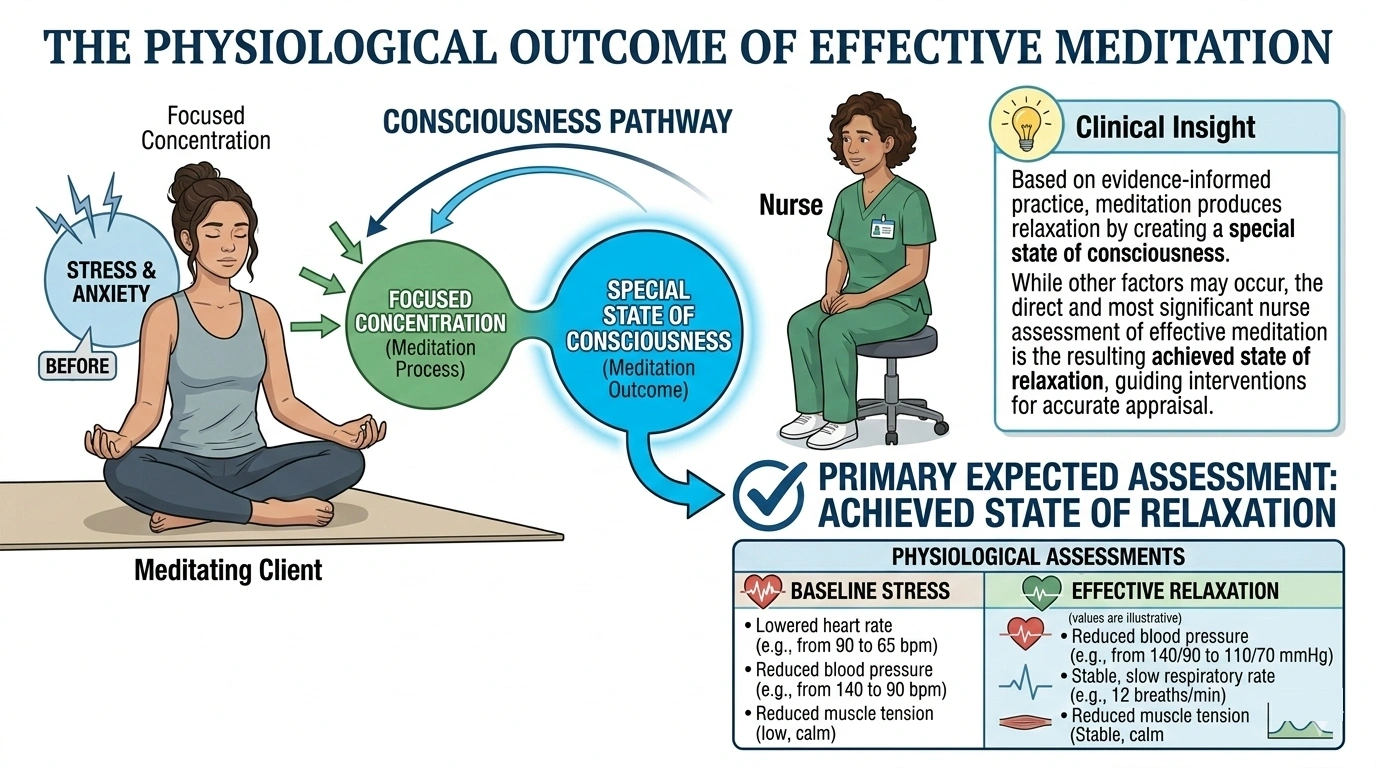
When an individuals stress response is sustained over a long period of time, which physiological effect of the endocrine system should a nurse anticipate?
A.
Decreased resistance to disease
B. Increased libido
C. Decreased blood pressure
D. Increased inflammatory response
Rationale
The choice that aligns with the client data is Decreased resistance to disease.
A. Decreased resistance to disease
This fits because In a general adaptation syndrome, prolonged exposure to stress leads to the stage of exhaustion at which time the bodys compensatory mechanisms no longer function effectively and diseases of adaptation occur. A decreased immune response is seen at this stage. Need: Physiological Integrity The underlying principle in the stem is best addressed by choosing the response that is both specific to the cue provided and consistent with evidence-informed psychiatric nursing practice. From a nursing standpoint, this selection guides assessment and interventions toward what is most clinically meaningful in the moment—risk reduction, safety, accurate appraisal, and support for adaptive coping.
B. Increased libido
This reflects a related idea, but it fits best when the idea in “Increased libido†addresses a different mechanism or priority than the one emphasized by the stem The wording does not track the stem’s main cue, so selecting it would shift the nurse away from the most precise interpretation or priority.
C. Decreased blood pressure
This reflects a related idea, but it fits best when the idea in “Decreased blood pressure†addresses a different mechanism or priority than the one emphasized by the stem The wording does not track the stem’s main cue, so selecting it would shift the nurse away from the most precise interpretation or priority.
D. Increased inflammatory response
This might be chosen when the idea in “Increased inflammatory response†addresses a different mechanism or priority than the one emphasized by the stem The wording does not track the stem’s main cue, so selecting it would shift the nurse away from the most precise interpretation or priority.
**Conclusion**
The stem provides enough information to select the most accurate interpretation without adding extra assumptions. The chosen answer reflects the correct framework, and the remaining choices drift toward incomplete, premature, or misdirected reasoning.
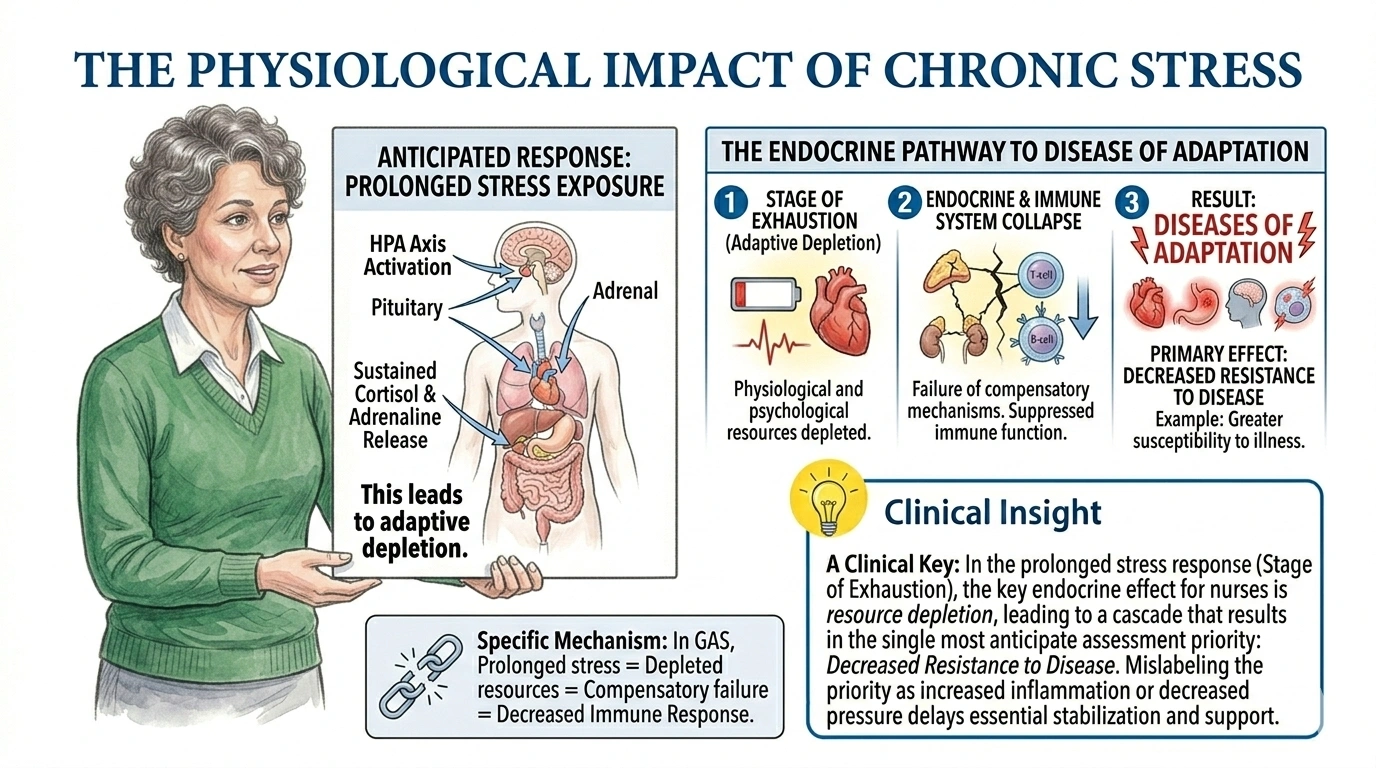
Research undertaken by Miller and Rahe in 1997 demonstrated a correlation between the effects of life change and illness. This research led to the development of the Recent Life Changes Questionnaire (RLCQ). Which principle most limits the effectiveness of this tool?
A.
Specific illnesses are not identified.
B. The numerical values associated with specific life events are randomly assigned
C. Stress is viewed as only a physiological response.
D. Personal perception of the event is excluded.
Rationale
Based on the information given, the response that addresses the question is Personal perception of the event is excluded..
A. Specific illnesses are not identified.
This would apply in a different scenario where the idea in “Specific illnesses are not identified.†addresses a different mechanism or priority than the one emphasized by the stem The wording does not track the stem’s main cue, so selecting it would shift the nurse away from the most precise interpretation or priority.
B. The numerical values associated with specific life events are randomly assigned
This reflects a related idea, but it fits best when the idea in “The numerical values associated with specific life events are randomly assigned†addresses a different mechanism or priority than the one emphasized by the stem The wording does not track the stem’s main cue, so selecting it would shift the nurse away from the most precise interpretation or priority.
C. Stress is viewed as only a physiological response.
This would apply in a different scenario where the idea in “Stress is viewed as only a physiological response.†addresses a different mechanism or priority than the one emphasized by the stem The wording does not track the stem’s main cue, so selecting it would shift the nurse away from the most precise interpretation or priority.
D. Personal perception of the event is excluded.
This matches the stem because Individuals differ in response to life events. The RLCQ uses a scale that does not take these differences into consideration. Need: Health Promotion and Maintenance Life-change scores offer a rough estimate of cumulative stress load, yet vulnerability is strongly shaped by coping style, resilience, health status, and the presence of practical and emotional supports. From a nursing standpoint, this selection guides assessment and interventions toward what is most clinically meaningful in the moment—risk reduction, safety, accurate appraisal, and support for adaptive coping.
**Conclusion**
What separates the best choice from the rest is specificity: the correct option addresses the exact mechanism, stage, or principle described. The other answers relate to nearby ideas, yet they miss the question’s focal point or misapply the concept to the situation.
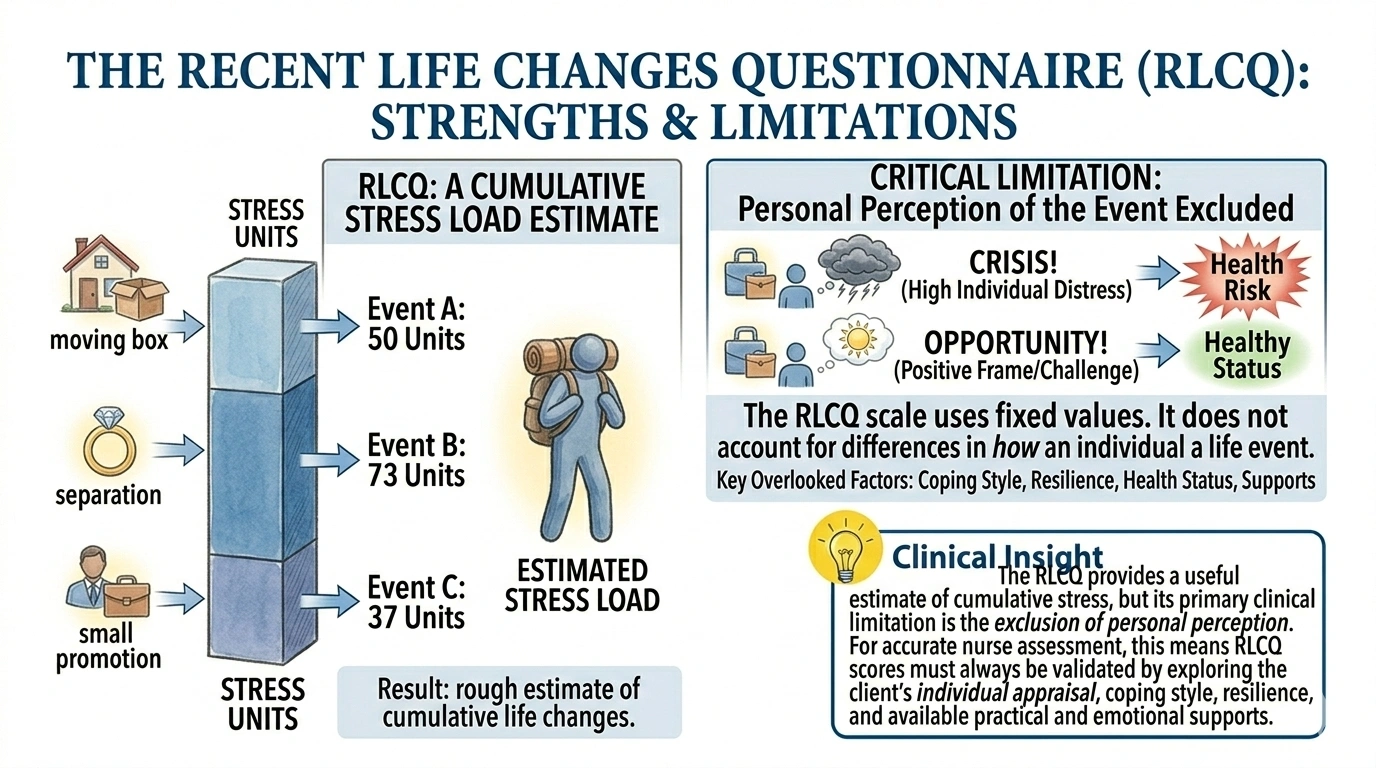
A nurse is working with a client who has recently been under a great deal of stress. Which nursing recommendations would be most helpful when assisting the client in coping with stress? Select all that apply.
A.
Enjoy a pet.
B. Spend time with a loved one.
C. Listen to music.
D. Focus on the stressors.
Rationale
The choice that aligns with the client data is Enjoy a pet.; Spend time with a loved one.; Listen to music.; and Journal your feelings..
A. Enjoy a pet.
This is supported by the detail that Focusing on the stressors is more likely to increase stress in the clients life. However, pets, music, journaling feelings, and healthy relationships have all been shown to decrease amounts of stress. Need: Psychosocial Integrity The underlying principle in the stem is best addressed by choosing the response that is both specific to the cue provided and consistent with evidence-informed psychiatric nursing practice. From a nursing standpoint, this selection guides assessment and interventions toward what is most clinically meaningful in the moment—risk reduction, safety, accurate appraisal, and support for adaptive coping.
B. Spend time with a loved one.
This matches the stem because Focusing on the stressors is more likely to increase stress in the clients life. However, pets, music, journaling feelings, and healthy relationships have all been shown to decrease amounts of stress. Need: Psychosocial Integrity The underlying principle in the stem is best addressed by choosing the response that is both specific to the cue provided and consistent with evidence-informed psychiatric nursing practice. From a nursing standpoint, this selection guides assessment and interventions toward what is most clinically meaningful in the moment—risk reduction, safety, accurate appraisal, and support for adaptive coping.
C. Listen to music.
This is supported by the detail that Focusing on the stressors is more likely to increase stress in the clients life. However, pets, music, journaling feelings, and healthy relationships have all been shown to decrease amounts of stress. Need: Psychosocial Integrity The underlying principle in the stem is best addressed by choosing the response that is both specific to the cue provided and consistent with evidence-informed psychiatric nursing practice. From a nursing standpoint, this selection guides assessment and interventions toward what is most clinically meaningful in the moment—risk reduction, safety, accurate appraisal, and support for adaptive coping.
D. Focus on the stressors.
This would apply in a different scenario where the idea in “Focus on the stressors.†addresses a different mechanism or priority than the one emphasized by the stem The wording does not track the stem’s main cue, so selecting it would shift the nurse away from the most precise interpretation or priority.
E. Journal your feelings.
This matches the stem because Focusing on the stressors is more likely to increase stress in the clients life. However, pets, music, journaling feelings, and healthy relationships have all been shown to decrease amounts of stress. Need: Psychosocial Integrity The underlying principle in the stem is best addressed by choosing the response that is both specific to the cue provided and consistent with evidence-informed psychiatric nursing practice. From a nursing standpoint, this selection guides assessment and interventions toward what is most clinically meaningful in the moment—risk reduction, safety, accurate appraisal, and support for adaptive coping.
**Conclusion**
The scenario is best handled by identifying what the nurse must interpret or prioritize first and then choosing the statement that fits that requirement with the least distortion. The distractors have surface appeal, but they do not align as tightly with the clinical cue embedded in the stem.
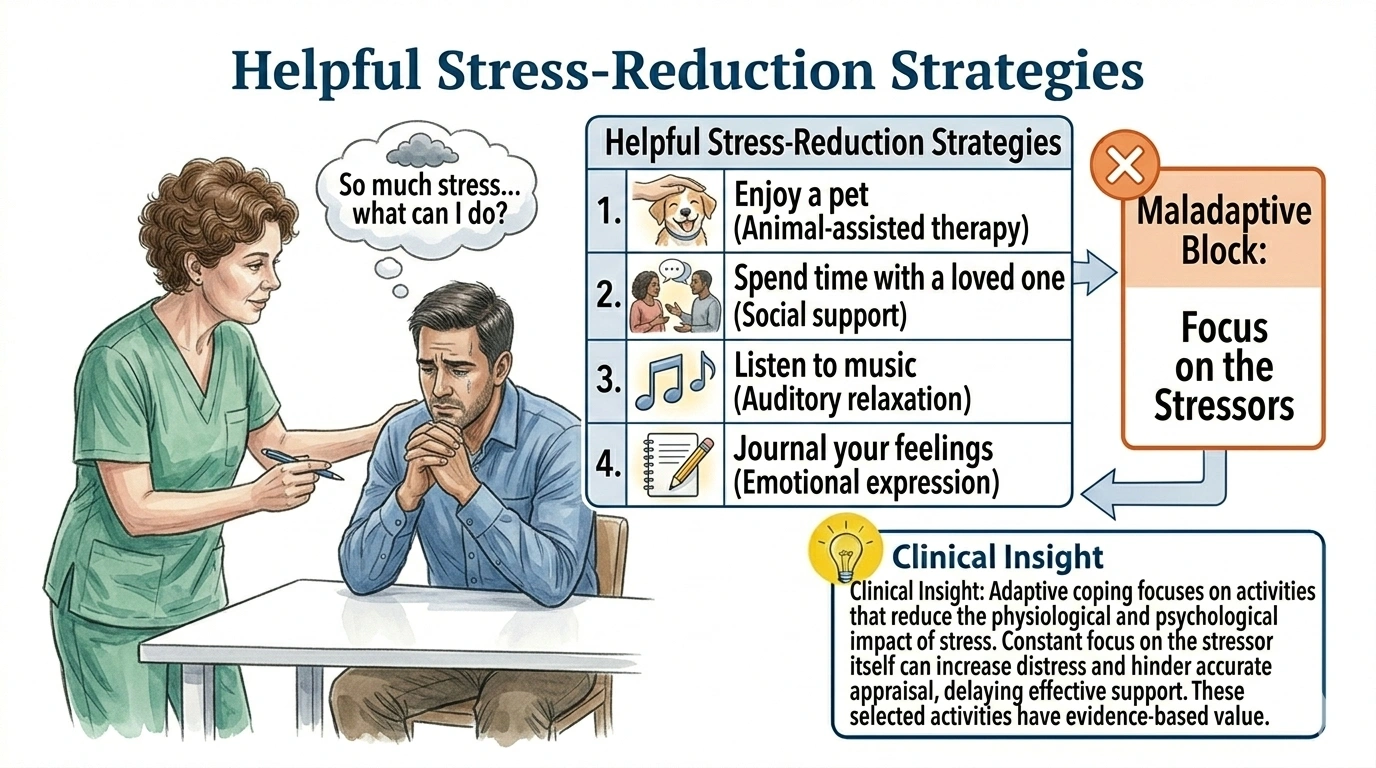
A nurse is assessing a client who is experiencing occasional feelings of sadness because of the recent death of a beloved pet. The clients appetite, sleep patterns, and daily routine have not changed. How should the nurse interpret the clients behaviors?
A.
The clients behaviors demonstrate mental illness in the form of depression.
B. The clients behaviors are extensive, which indicates the presence of mental illness.
C. The clients behaviors are not congruent with cultural norms.
D. The clients behaviors demonstrate no functional impairment, indicating no mental illness.
Rationale
Based on the information given, the response that addresses the question is The clients behaviors demonstrate no functional impairment, indicating no mental illness. .
A. The clients behaviors demonstrate mental illness in the form of depression.
This might be chosen when the idea in “The clients behaviors demonstrate mental illness in the form of depression.†addresses a different mechanism or priority than the one emphasized by the stem The wording does not track the stem’s main cue, so selecting it would shift the nurse away from the most precise interpretation or priority.
B. The clients behaviors are extensive, which indicates the presence of mental illness.
This would apply in a different scenario where the idea in “The clients behaviors are extensive, which indicates the presence of mental illness.†addresses a different mechanism or priority than the one emphasized by the stem The wording does not track the stem’s main cue, so selecting it would shift the nurse away from the most precise interpretation or priority.
C. The clients behaviors are not congruent with cultural norms.
This would apply in a different scenario where the idea in “The clients behaviors are not congruent with cultural norms.†addresses a different mechanism or priority than the one emphasized by the stem The wording does not track the stem’s main cue, so selecting it would shift the nurse away from the most precise interpretation or priority.
D. The clients behaviors demonstrate no functional impairment, indicating no mental illness.
This fits because The nurse should assess that the clients daily functioning is not impaired. The client who experiences feelings of sadness after the loss of a pet is responding within normal expectations. Without significant impairment, the clients distress does not indicate a mental illness. Need: Psychosocial Integrity The underlying principle in the stem is best addressed by choosing the response that is both specific to the cue provided and consistent with evidence-informed psychiatric nursing practice. From a nursing standpoint, this selection guides assessment and interventions toward what is most clinically meaningful in the moment—risk reduction, safety, accurate appraisal, and support for adaptive coping.
**Conclusion**
The best answer stays tightly aligned to the stem’s defining cue and the specific framework being assessed. Competing options are close in theme, yet they either shift the priority or extend beyond the evidence in the prompt.
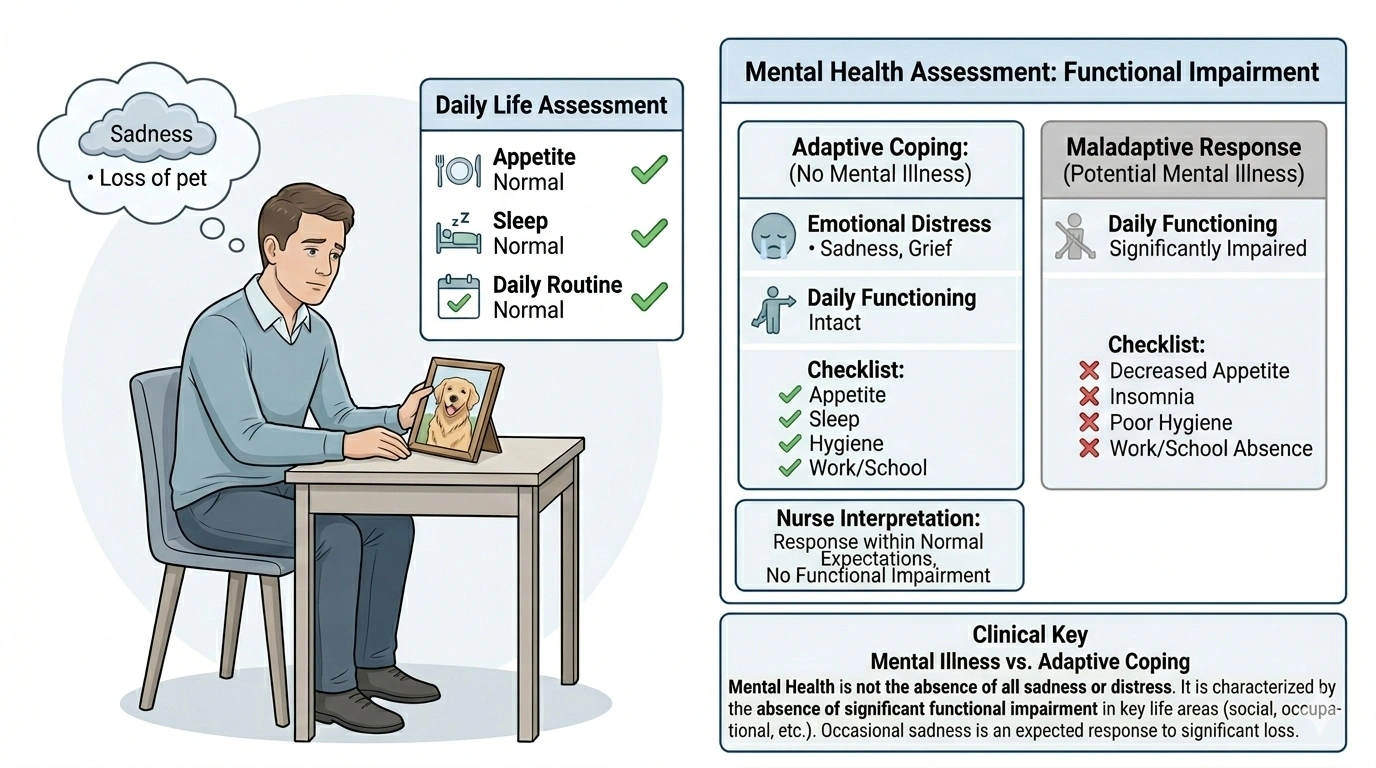
RN Exams
ATI Quizzes
3 Practice Tests
ATI Quizzes
3 Practice Tests
ATI Quizzes
3 Practice Tests
ATI Quizzes
3 Practice Tests