100%
4
Rated
Attempts
127
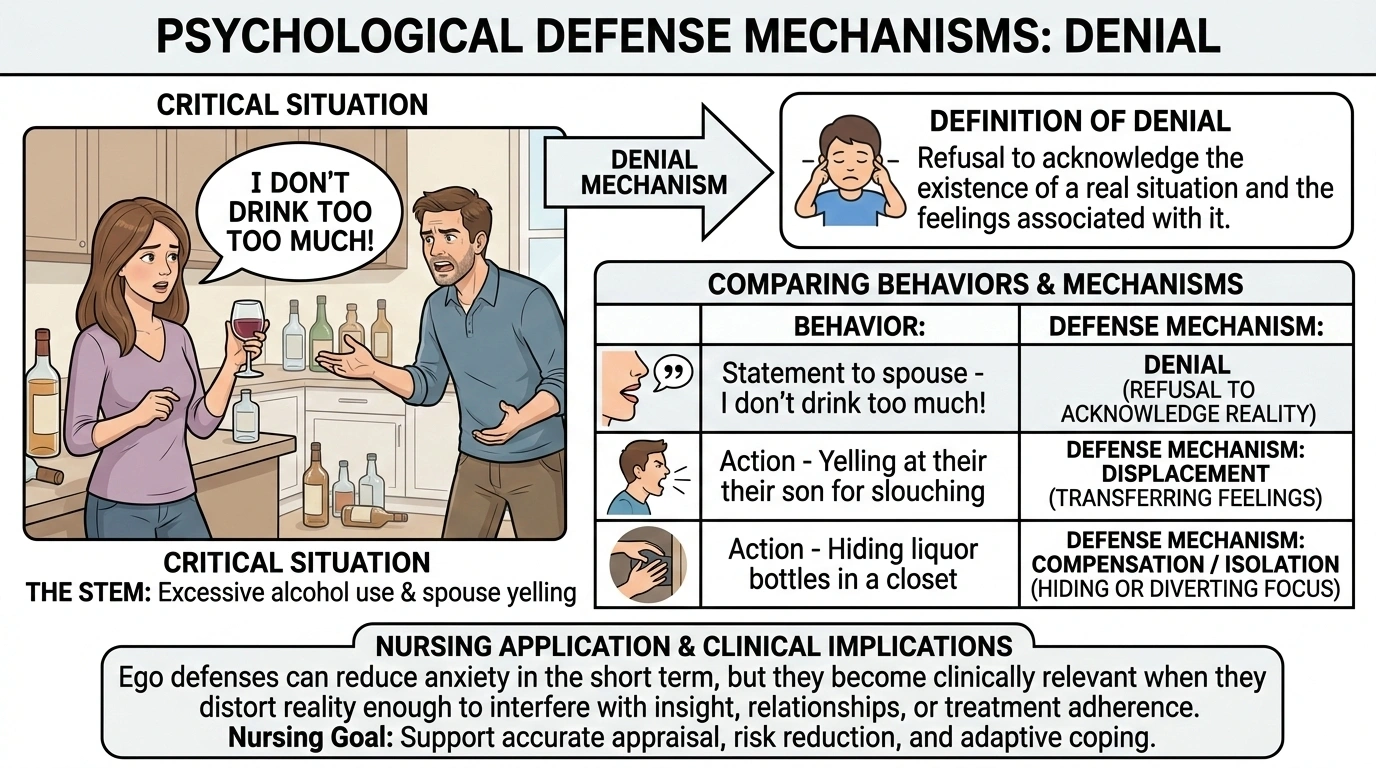
When under stress, a client routinely uses an excessive amount of alcohol. Finding her drunk, her husband yells at her about the chronic alcohol abuse. Which reaction should the nurse recognize as the use of the defense mechanism of denial?
-
A
Hiding liquor bottles in a closet
-
B
Yelling at their son for slouching in his chair
-
C
Burning dinner on purpose
-
D
Saying to the spouse, I dont drink too much!
A
Hiding liquor bottles in a closet
B
Yelling at their son for slouching in his chair
C
Burning dinner on purpose
D
Saying to the spouse, I dont drink too much!
Related Questions
Top Picks
Devastated by a divorce from an abusive husband, a wife completes grief counseling. Which statement by the wife should indicate to a nurse that the client is in the acceptance stage of grief?
A nurse is performing a mental health assessment on an adult client. According to Maslows hierarchy of needs, which client action would demonstrate the highest achievement in terms of mental health?
According to Maslows hierarchy of needs, which situation on an inpatient psychiatric unit would require priority intervention by a nurse?
Which client should the nurse anticipate to be most receptive to psychiatric treatment?
A new psychiatric nurse states, This clients use of defense mechanisms should be eliminated. Which is a correct evaluation of this nurses statement?
Available Test
Sets
Available FREE Test
Sets