100%
4
Rated
Attempts
127
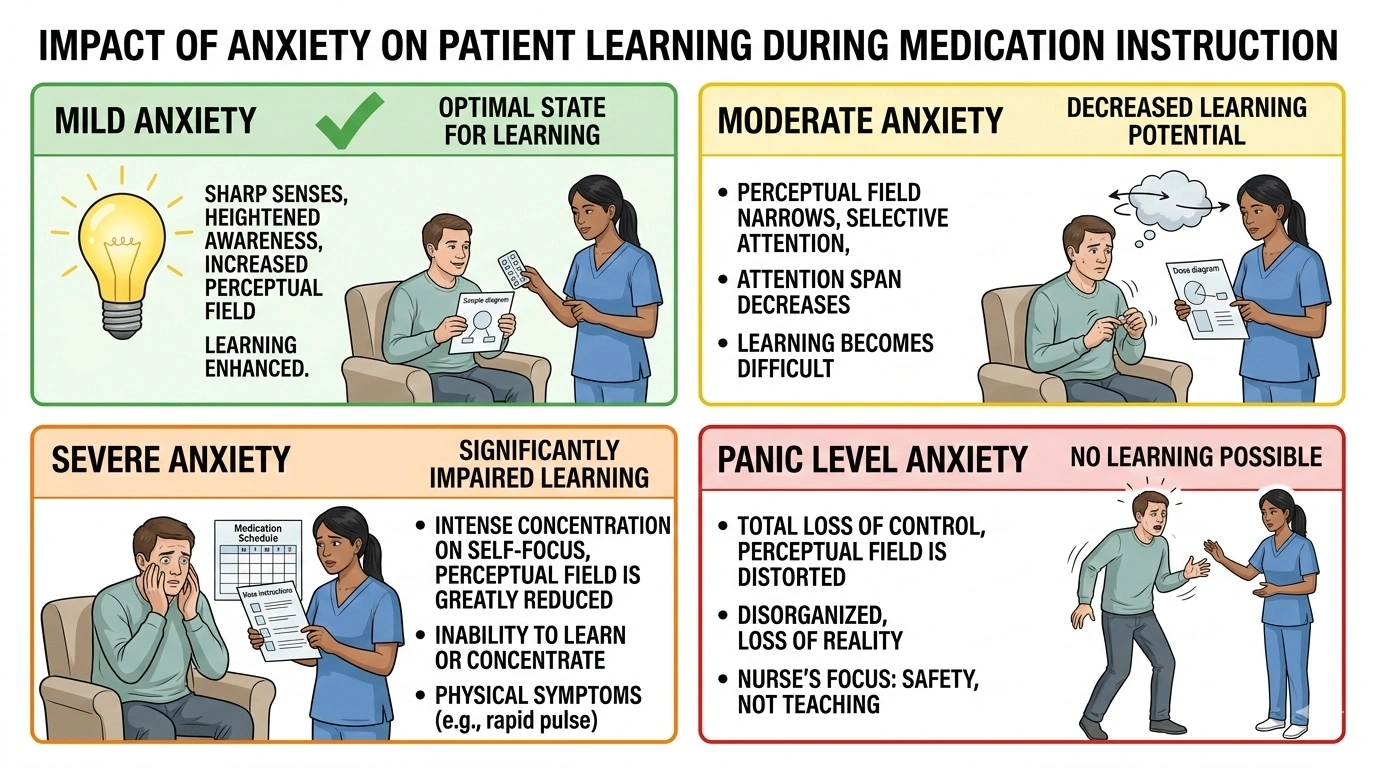
The nurse is preparing to provide medication instruction for a patient. Which of the following understandings about anxiety will be essential to effective instruction?
-
A
Learning is best when anxiety is moderate to severe.
-
B
Learning is enhanced when anxiety is mild.
-
C
Panic level anxiety helps the nurse teach better.
-
D
Severe anxiety is characterized by intense concentration and enhances the attention span
A
Learning is best when anxiety is moderate to severe.
B
Learning is enhanced when anxiety is mild.
C
Panic level anxiety helps the nurse teach better.
D
Severe anxiety is characterized by intense concentration and enhances the attention span
Related Questions
Top Picks
Which of the following are identified as psychoneurotic responses to severe anxiety as they appear in the DSM-5?
An employee uses the defense mechanism of displacement when the boss openly disagrees with suggestions. What behavior would be expected from this employee?
A teenage boy is attracted to a female teacher. Without objective evidence, a school nurse overhears the boy state, I know she wants me. This statement reflects which defense mechanism?
A fourth-grade boy teases and makes jokes about a cute girl in his class. This behavior should be identified by a nurse as indicative of which defense mechanism?
Which nursing statement about the concept of neuroses is most accurate?
Available Test
Sets
Available FREE Test
Sets